




Understanding Display Homes: What They Really Show You About Building
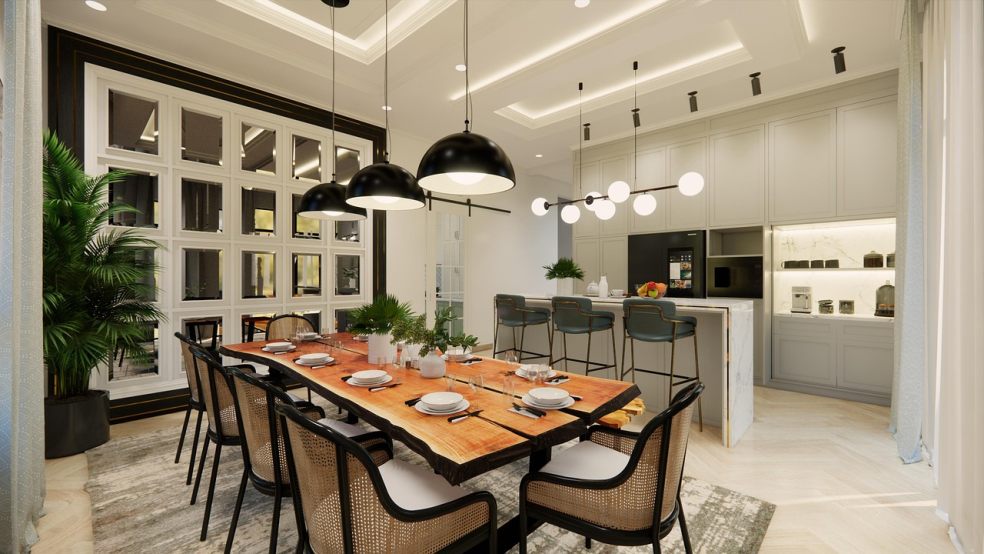
Have you ever walked through a display home and thought: this is too good to be true? The furniture placed ever-so-perfectly, the lighting strikes just right at every angle, building a new home doesn't just become plausible, it becomes exciting. What often gets overlooked on that first walkthrough is that a display home is an essentially manufactured creation, something really pretty with the hopes of showcasing everything the builder can do.
But it's not deception. It's not a waste of time either. Display homes serve an incredibly practical purpose. They showcase construction (quality) in person, provide three-dimensional floor plans that people can walk through and get a sense of spatial awareness no floor plan can truly provide. The trick is being able to see beyond the pretty to what actually applies to your build and pocketbook.
What's Included in the Display Home Price
This is where things get tricky. That kitchen with the waterfall stone benchtops? An upgrade. That designer light fixture in every corner? An upgrade. What you're standing on when you tour the display? An upgrade. Typically, builders have base price specifications that accompany their homes. However, these display homes often have all the bells and whistles (and in some cases, less appealing features are hidden behind the walls). They want to show off their best work and in doing so, give buyers fewer options than they hoped.
When investigating display homes in Sydney for sale, ask about every single finish and fixture that catches your eye. What's included as standard? What are optional upgrades? Builders differ on how transparent they are about what should be expected in their starting price. Some include a detailed list of inclusions while others have incremental surprises, resulting in slightly awkward conversations later down the road when an initial quote is suddenly thousands of dollars over budget.
Builders who are transparent will provide an inclusions list, something that details what's included for the starting price. Those who are less forthcoming might surprise a buyer with an inclusion that's worth 10% percent of their entire allowance from the start.
The Floor Plan
Builders generally display their most popular home or most versatile floor plan as their display home option. This is typically a tried-and-true layout that's found to work for the masses, which means that it's relatively functional. But not every block of land is identical, and what works beautifully for a display home might need some serious alterations on a permanent lot.
Orientation is key, perhaps more than anyone ever realizes. That absolutely stunning north-facing living room of the display home may become south-facing on an actual lot, shifting daylight patterns throughout the day. The requirements in setback for council could mean that homeowners must push their new home up or back on the lot, eating up backyard space, or even worse, with block dimensions suggesting turning the plan instead.
Most builders will accommodate alterations to their plans, some simple, some not so much. The bad news is that altering them typically costs money. If a buyer wants to adjust a floor plan by moving a bathroom/kitchen/laundry/making these rooms bigger or smaller, it involves replumbing or footings or extending roofs, which costs money. Even something simple, like adding a secondary window, needs engineering.
What They're Actually Known For - Construction Quality
This is where display homes do the best deed: they showcase what's actually known about a builder when their homes go up. The quality of joinery, how ceilings meet walls/ceiling finish, how doors operate and get hanged, doorknobs/light switches, there's weight in things that the eye can see and what's hidden behind walls that help offer insight about builder standards.
Pay attention to corners, paint texture consistency and whether tiles are laid properly to be straight and have uniform grout lines. Open and close doors and windows, do they stay shut? Look at powerpoints and light switch placement, are they finished? Are they set at the right height? All of these elements speak to whether a builder is detail-oriented or just gets by on finish.
As for what's not seen, these elements are harder to assess when display homes are up. Some builders have "construction display homes," which means they keep framing/uninsulated systems exposed before they get covered up. While great for learning what's behind the walls and studs (translation: what's going to be behind your walls once they're up), it's rarer for builders to cater these homes.
The Styling Elements
Is it professional styling or just magic? Every display home looks like something out of a magazine. Furniture's perfectly proportioned to rooms, art is placed perfectly on walls, and every surface appears decorated enough without clutter to make it look lived in. This evokes an emotional response because if buyers can live there without visual input concerns, then they must be sold on buying it.
Except most people's furniture won't fit exactly into those parameters anyway. The couch placed in that living room. Specially picked out to fit such dimensions, for appearances only, and the table and chairs are to downsize the space, so it looks big instead of cramped or lived in. The bed's also smaller than most people actually want.
Bring out a measuring tape to ground reality vs expectation. Measure room sizes, door widths between rooms, hall clearance widths etc., where will existing furniture actually sit? Will there be enough room to house desired items? Is there enough storage for what real life demands?
What to Take Away from Visiting Display Homes
The best takeaway from visiting display homes is seeing multiple builders for similar price point comparisons. Builders differ in construction styles, materials used and finish quality and standing next to something that's similar but ultimately constructed by someone else highlights those differences much easier than side-by-side.
Take photos (most builders allow this) and note specific features, what might just be "a pretty detail" could serve extremely beneficial down the road by prompting good answers when asking about average timelines, warranty coverage and builder suggestions if issues arise during construction. Sometimes the answers reveal more than presence or absence of quality.
Display homes might not predict what your true custom build looks like down the line, but it's a good litmus test for finding the appropriate builders for your budgetary considerations after learning how what's hidden behind the pretty makeup can help inform what's practically possible based on what's in front of you.