






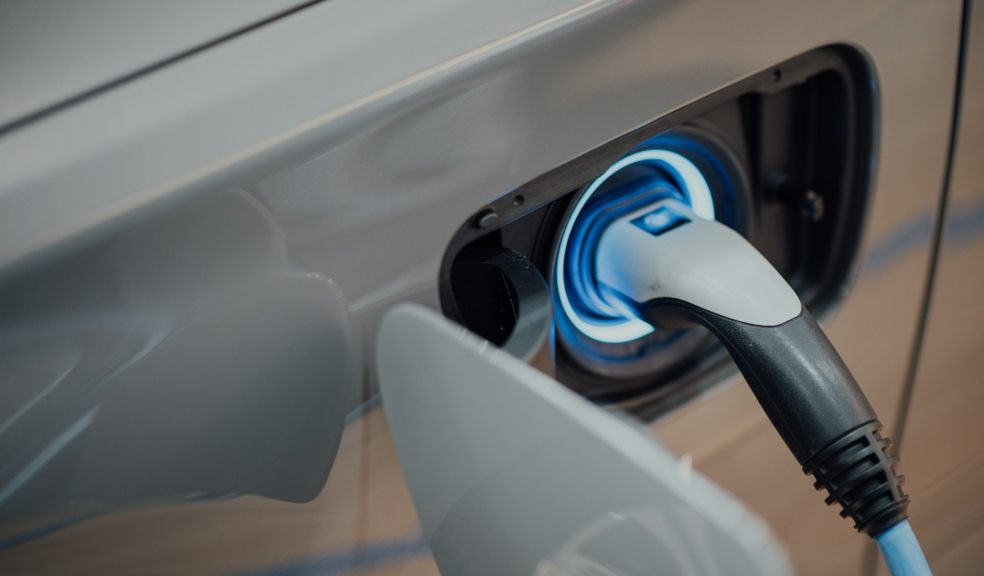
Should You Invest in Domestic EV Charging, or Rely on Public Chargers?
Anyone weighing up an electric car eventually runs into this question, usually somewhere around the point of getting a quote for the driveway work. A home charger costs money upfront. The public network is already out there, live and waiting. Why not just use that?
It's a fair question. For a meaningful slice of the country there's a straightforward reason to skip it: not having a driveway. But for anyone with a driveway or a garage, treating a home charger as optional is a bet against convenience, and it's one that gets more lopsided every few months as the numbers move.
The Cost Gap (which is about to get wider)
Zapmap's official charging price index put the UK's average public charging rate in July 2026 at 54p per kWh for standard and standard-plus chargers, and 80p per kWh for rapid and ultra-rapid ones, working out to roughly 16p and 24p per mile depending on which you use. RAC Charge Watch data tells a similar story from a different angle: off-peak home charging can cost as little as 7p per kWh.
That gap is about to stretch further. On 21 July 2026 the Government confirmed that VAT on domestic electricity, including whatever you use to charge a car on your own driveway, drops from 5% to 0% from 1 October 2026. Public charging stays standard-rated at 20%. There's a tribunal ruling working its way through appeal that could eventually bring some public charging under the reduced rate too, but until that's settled, the tax treatment alone means home charging just got cheaper while public charging didn't move.
The Reliability Gap
Cost isn't the only argument. Since November 2024, UK rapid charging networks have been legally required to hit 99% average annual uptime, but a 2025 industry survey of charge point operators found only 3.9% currently meet that bar.
Separate research from S&P Global Mobility in March 2026 found 47% of EV owners had run into at least one problem using a public charger in the past year, whether that's a broken unit, a card reader that won't take payment, a bay that's already occupied, or an app that won't load.
A home charger doesn't have any of those failure points. It's yours, and it works when you plug it in. You don’t need a strong 5G connection just to pass the paywall, and you won’t turn up on 12% battery to find that all the chargers are in use.
Does Relying on Public Charging Ever Make Sense?
None of this is universal, and it's worth being straight about who the public network actually serves well. For that population, the picture is also improving on its own terms. Field Dynamics data cited by Zapmap shows 24% of driveway-less households were within a five-minute walk of a public charger in 2024, up from just 12% in 2020.
For most of the county, the practical situation looks quite different to a city flat with no parking.
Here’s one example: Gloucestershire's public network is still concentrated in Cheltenham and Gloucester, with Stroud and the county's other towns gradually catching up, and the county council's own reporting has it on track for 382 charge points installed by the end of 2026, working towards a longer-term target of nearly 1,800 over five years through a new private-investment contract. Genuine progress, but it also confirms the network is still thin outside the main towns. For more remote properties, relying on the public network means going out of your way – every time.
A charger installed properly does more than let a cable reach the car. gsmlimited, which installs domestic EV charging across Newent, Cheltenham and the wider Gloucestershire area, designs each installation around where the car actually parks and where the consumer unit sits, rather than running a cable wherever happens to be easiest. Their team also checks the property's existing electrical capacity before recommending anything..
Pairing the charger with solar panels and a battery, where a household already has them, opens up a further option: directing spare solar generation into the battery first, then drawing on it to charge the car rather than pulling straight from the grid, with the system watching solar production and household demand in real time to decide when that handover makes sense.
Even without solar or a battery in place yet, the charger itself can be specified with that future step in mind, so it isn't ripped out and replaced the moment the rest of the setup catches up.
Weighed against a public network that costs more per mile and is about to be taxed more heavily still, the home charger comes out as the cheaper, steadier option of the two, and it's also the one that doesn't fail on nearly half of drivers at least once a year. For anyone with a drive to park on, skipping it is the harder position to justify.