






Step-by-Step Guide: How to Find the Perfect Venue and Talent
Most event-planning advice treats venue and entertainment as two separate decisions. They're not — the wrong venue can rule out the act you want, and the wrong act can waste a venue's best features. This guide walks through both in the order they actually need to happen, plus what to do if your entertainment cancels on you at the last minute.
Why Venue and Talent Decisions Need to Happen Together
 Booking a venue and booking entertainment aren't independent decisions — a venue's size, layout, and power supply directly determine which acts can actually perform there, and an act's setup needs can rule out venues before you've even toured them.
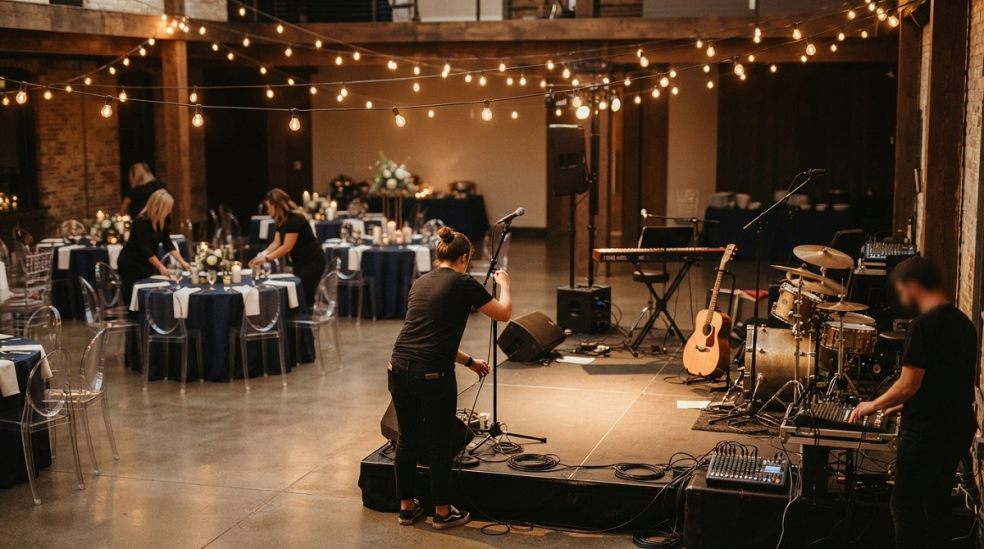
- A five-piece band needs floor space, power outlets, and often a raised area a small function room doesn't have
- A close-up magician or an acoustic duo can work pretty much anywhere, but they tend to disappear in a huge hall set up for a full band.
- Some venues come with noise curfews, licensing headaches, or neighbors right next door—so amplified music may be off the table, no matter how much you want it.
Working through venue and talent in the same process, rather than locking in a venue and hoping entertainment fits afterward, avoids discovering a mismatch after you've already paid a deposit.
Step 1: Define Your Event Basics
Before you start scrolling through venues or acts, settle four things: your date, your guest count, your budget, and your event type. Every venue and talent decision after this point gets filtered through these four basics.
- Date — including flexibility; a fixed date narrows your venue and act options far more than a flexible one
- Guest count — both your realistic minimum and maximum, since this determines venue size and often act pricing tiers
- Total budget — split roughly between venue hire and entertainment before you start browsing either, so one doesn't eat the other's share
- Event type and tone — a formal corporate dinner, a relaxed birthday, and a wedding reception each point toward very different venues and acts
Step 2: How Do You Find the Right Venue?
You find the right venue by matching it against five factors in order: guest capacity, location and access, facilities, contract terms, and a verified in-person or virtual look at the space.
- First, pick venues that fit your numbers—with a bit of wiggle room. No one wants to be packed in like sardines, or lost in a cavernous space.
- Next, make sure the location works. Is there decent parking? Good public transport links? Somewhere to stay if people are coming from out of town?
- Check the basics—AV gear, catering options, accessible toilets, and a layout that makes sense for your event.
- Then, read the fine print: hidden charges for overtime, deposits, how cancellations work, and any limits on bringing your own entertainment or food.
- Verify the space yourself — photos and reviews online, then an in-person visit or virtual tour before signing anything.
Step 3: How Do You Find the Right Talent?
Matching the right act to your event comes down to style and setup. Make sure their vibe suits your space, and double-check they’re really available on your date before you get your heart set on them.
- Start with tone and style, not just “band vs. DJ” — a wedding ceilidh band, a jazz trio, and a covers band all fill the same slot very differently
- Watch and listen to real performance footage before booking, not just a polished demo reel
- Confirm actual availability for your specific date early — the best acts in any category get booked out months in advance, especially for weekend dates
- Get a clear, upfront fee before you commit, and clarify what it does and doesn't include (travel, equipment, set length, overtime rate)
This is the step where a dedicated entertainment marketplace earns its keep over cold-emailing acts one by one. GigArmy, a UK marketplace for live entertainment, lets you search singers, bands, DJs, comedians, magicians, dancers, and variety acts by real availability and distance from your venue rather than working through a rigid list of areas — so you only see acts who can genuinely play your date.
Step 4: Make Sure Your Venue and Talent Actually Fit Together
Once you have a shortlisted venue and a shortlisted act, check them against each other specifically — not just against your general requirements — before booking either one.
- Space and layout: confirm the venue has room for the act's full setup, including any staging, dance floor, or equipment table
- Power supply: bands, DJs, and larger acts need sufficient outlets in the right location, not just “a socket somewhere”
- Don’t forget the nitty-gritty: ask the venue about noise limits and their entertainment license.
- Does it cover how loud and how late you want to go? Find out how the act can bring in their stuff—some venues have tricky stairs, small lifts, or tight load-in windows.
Step 5: What to Confirm Before You Book Anything
Before you hand over any deposit, lock in four things in writing:
- The total cost (including all the sneaky extras like overtime, travel, or equipment), cancellation terms, what happens if something goes wrong, and who your main contact is on the day.
- Cancellation and refund terms — for both the venue and the act, since they're rarely identical
- A clear fallback plan if either the venue or the act cancels (see the next section for entertainment specifically)
- A single confirmed contact and arrival time for the day, agreed with both the venue and the act in advance
What Happens If Your Entertainment Cancels Last Minute?
A last-minute cancellation is one of the most common event-planning problems, and one almost no venue-finding guide addresses — illness, transport issues, or double bookings happen even with reliable acts, so it's worth having a plan before it happens to you, not after.
- Ask any act you book what their own backup or cancellation policy is before you sign anything
- Always have a backup—keep a shortlist of two or three similar acts, just in case.
- And if your schedule can handle it, leave some wiggle room. That way, if there’s a delay or last-minute change, your event still runs smoothly.
Some marketplaces have built a specific answer to this exact problem.
GigArmy SOS is a mode built for this scenario specifically: when a booked act drops out, a venue or host can flag the gap and every available, gig-ready performer within travel distance sees it immediately, with the fee, start time, and distance attached — turning a last-minute scramble into a same-night replacement search instead of a cancelled evening.
Conclusion
Finding the perfect venue and the perfect talent isn't two separate projects — it's one connected process, and treating it that way from the start avoids the most common event-planning headaches: mismatched spaces, incompatible acts, and no plan when something falls through.
Ready to start the talent side of your search? Set your date, budget, and event type from Step 1, then search by real availability instead of cold-emailing acts one by one — it's the single change that saves the most time in this whole process.
Create a free account on GigArmy to browse UK entertainment by real availability and distance, and keep GigArmy SOS in mind as your backup plan if an act ever cancels on you.