






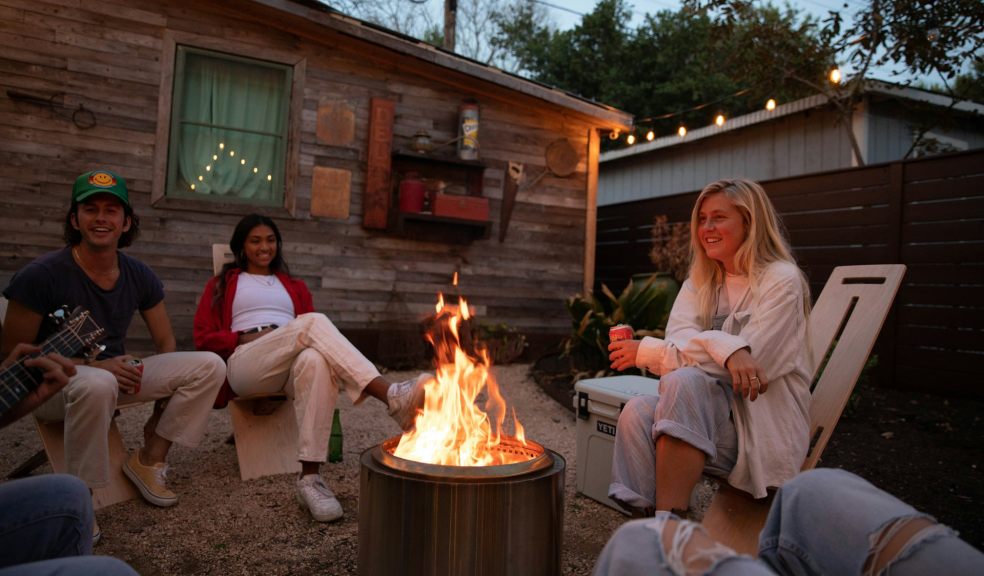
Are smokeless fire pits truly smokeless? (and why they sometimes smoke)
A backyard fire is one of the more straightforward pleasures of outdoor living — until your eyes start stinging and your jacket smells like smoke the next morning. That experience is exactly what drives most people to look into smokeless fire pits.
The short answer to the main question: no wood-burning fire is completely smokeless. However, a properly designed smokeless fire pit can reduce visible smoke by 80 to 90 percent once the fire reaches operating temperature. This article explains how that reduction works, what to expect during normal use, and why some smokeless pits still produce noticeable smoke.
How Smokeless Fire Pits Work: Airflow and Secondary Combustion
Smoke from a conventional fire pit comes from incomplete combustion. When wood does not burn fully, unburnt particles and combustion gases rise and escape into the air as visible smoke. Smokeless fire pits address this through a three-part airflow mechanism.
Step 1 — Bottom air intake. Cool air enters through vents at the base of the pit. This air feeds the primary burn at the bottom of the fire, ensuring the main flame has a consistent oxygen supply.
Step 2 — Double-wall heating. The pit's inner and outer walls form a sealed channel. As cool air travels upward through this channel, the heat from the burning fire superheats it before it reaches the top.
Step 3 — Secondary combustion at the rim. Superheated air exits through small holes or slots near the upper rim of the pit. These jets of hot, oxygen-rich air are directed inward and downward, directly into the rising smoke column. The temperature at this stage is high enough to reignite the unburnt particles — burning the smoke before it escapes. This process is called secondary combustion.
The result is a visible ring of jets at the top of the pit during a full burn, and a flame that is noticeably more transparent than what a standard open pit produces.
What "Smokeless" Actually Means in Practice
The term "smokeless" refers to the output during peak burn, not throughout the entire session. There are two distinct phases to understand.
- During start-up (the first 10 to 15 minutes): When the fire is just getting started, the combustion chamber has not yet reached the temperature needed to sustain secondary combustion. During this phase, the pit behaves much like a standard fire pit and will produce some initial smoke. This is normal and expected.
- At peak burn: Once the secondary combustion cycle is active, the flame becomes steady and nearly transparent. Odor is significantly reduced, and the amount of ash left after the session is noticeably less than what a conventional pit produces — because more of the wood is converted to heat rather than leaving residue.
The practical difference for outdoor use: there is no need to shift position around the fire to avoid smoke, and clothing does not retain the same heavy smoky odor after the session ends.
4 Reasons a Smokeless Fire Pit Still Produces Smoke
If a smokeless pit is still producing visible smoke well beyond the start-up period, one of four issues is usually the cause.
1. Wet or Green Wood
Wood with a moisture content above 20 percent requires significant energy just to evaporate that water before it can burn. This lowers the temperature inside the combustion chamber, which prevents secondary combustion from engaging.
Solution: Use seasoned hardwood or kiln-dried hardwood. Oak, hickory, and ash are reliable choices. Kiln-dried wood typically has a moisture content below 20 percent and is available at most hardware stores year-round.
2. Firewood Stacked Above the Top Vent Line
The secondary combustion holes at the rim need a clear path to direct heated air into the smoke column. When logs are stacked too high and extend above the vent line, they physically block those holes and cut off the oxygen supply needed for the second burn.
Solution: Keep all logs 1 to 2 inches below the interior rim of the pit at all times. This allows the top vents to function without obstruction.
3. Ash Blocking the Bottom Intake Vents
Ash accumulates at the base of the pit during and after each burn. When it builds up to the point where it covers the bottom intake holes, the primary fire is starved of oxygen, the chamber temperature drops, and the secondary combustion cycle cannot sustain itself.
Solution: Clear the ash pan or sweep out the base vents before lighting each session. A full cleanout after every two to three uses is a reasonable maintenance interval for regular users.
4. Ignition Technique
Starting a fire from the bottom up — with kindling on the grate and larger logs added over the top — tends to produce more smoke during the start-up phase because the fire draws air unevenly and takes longer to stabilize.
Solution: Use the top-down ignition method. Place larger logs at the base, medium pieces in the middle, and kindling or fire starters on top. Light the top layer and let the fire burn downward. This approach establishes a strong draft more quickly and moves the pit through the smoky start-up phase in less time.
Enjoy a Cleaner Fire with the Sunjoy 28-Inch Smokeless Fire Pit
So, are smokeless fire pits truly smokeless? Not entirely. But with the right design, proper airflow, and dry firewood, you can significantly reduce smoke and enjoy a more comfortable outdoor fire.
If you're looking to put these principles into practice, the Sunjoy 28-Inch Stainless Steel Smokeless Fire Pit is worth considering. Its double-wall construction, bottom intake vents, and upper secondary combustion ports work together to promote more efficient burning and reduce visible smoke. Plus, its spacious 28-inch design accommodates standard 16- to 18-inch firewood logs, making it a practical choice for backyard gatherings and relaxing evenings on the patio.
Ready to spend less time avoiding smoke and more time enjoying the fire? Explore the Sunjoy 28-Inch Stainless Steel Smokeless Fire Pit and create a more enjoyable outdoor experience.
Collaborative post.