5 Tokyo Hotels for Elderly Parents With Easy Elevator Access to the Metro
Advertisement
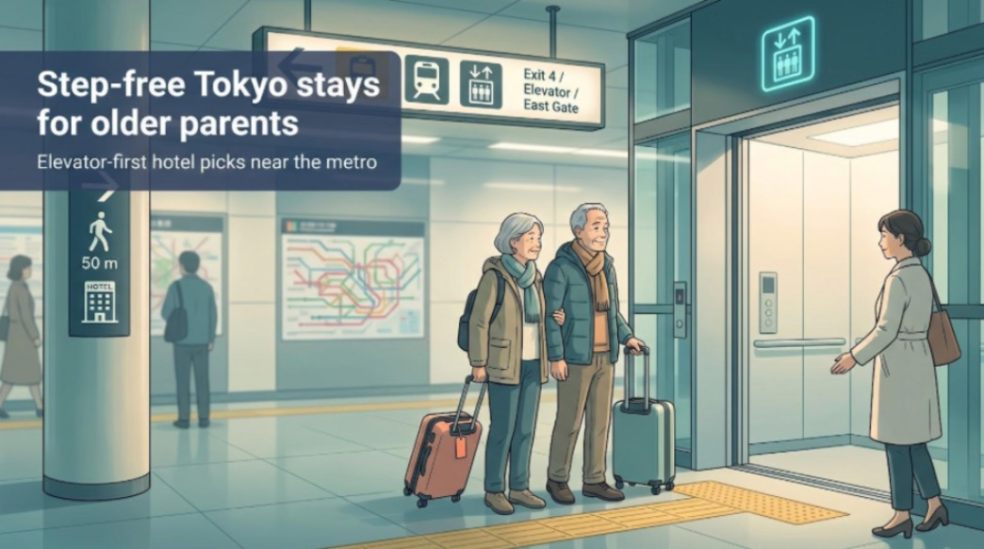
Your parents are coming to Tokyo - and stairs are off-limits. This guide spotlights five hotels where a standard lift whisks you from train platform to hotel lobby. You’ll see exactly which elevator to take, how far you’ll walk (never more than 250 metres), and the quirks to plan around. Choose the hotel that fits their pace, then start the trip with energy to spare.
Before you book: confirm today’s room and route
Tokyo room availability changes quickly. What is free at breakfast may be gone by lunch.
- Open Tokyo Hotels for Seniors on Trip.com and enter your dates to see which of the five hotels still has its universal room open.
-
Call or email the hotel. Quote the formal name of its universal (accessible) room and ask whether
- that room is still available for your dates, and
- the station lift at the specified exit is working as normal.
This ten-minute double-check prevents the common shock of finding a high-sided tub or a late-night karaoke bar beside the room.
Your five fast picks
Below is the at-a-glance shortlist. Each hotel meets all three checkpoints: a step-free station route, a senior-friendly room, and solid recent reviews.
- Royal Park Hotel, Suitengumae - Best overall balance. Lift at Hanzomon Line Exit 4, ≤50 m to lobby; airport bus next door. Accessible twins are limited, so book early.
- JR-East Hotel Mets Premier Gotanda - Best for daily rail travel. Yamanote Line sits beneath the building; lift-to-lobby walk ≤75 m. Nightlife outside, but the universal twin is a quiet refuge.
- Mitsui Garden Hotel Toyosu Premier - Best for quiet nights and extra space. Indoor walkway from Yurakucho Line Exit 2b, ≤100 m. Bay-area calm plus skyline views from a 30 m² accessible twin.
- Asakusa Tobu Hotel - Best for traditional Tokyo and value. Asakusa Station is about a one-minute walk away (confirm the lift exit before you go). Ask which accessible layouts, double or twin, are available.
- Hotel Metropolitan Oimachi Tracks Tokyo - Best new option. Opened March 28, 2026; connected directly to JR Oimachi Station’s Tracks exit. Ideal for mobile seniors, but full wheelchair specs still pending.
What we mean by “easy elevator access”
Tokyo stations sprawl; one block on the map can hide eight exits and only one may have a lift. Our “easy elevator access” label follows five strict rules:
- Zero stairs from platform to hotel lobby. One step is one too many.
- Standard passenger lift at the named exit (never a stairlift or a “wheelchair-ready” escalator that can close without notice).
- Walk ≤250 metres from ticket gate to reception, roughly four relaxed minutes with hand luggage.
- Sign-posted route you can screenshot. Lift, gate, and street labels match, so no looping through tunnels.
- A route you can confirm yourself. Check the public elevator closest to each hotel through the Tokyo Metro accessibility search before you travel.
Treat these five points as your safety net. They narrow hundreds of “near-the-station” claims to the few that keep older legs fresh for the fun part of the day.
How we scored each hotel
Our scorecard allocates 100 percent across five factors chosen to reduce fatigue for older travellers:
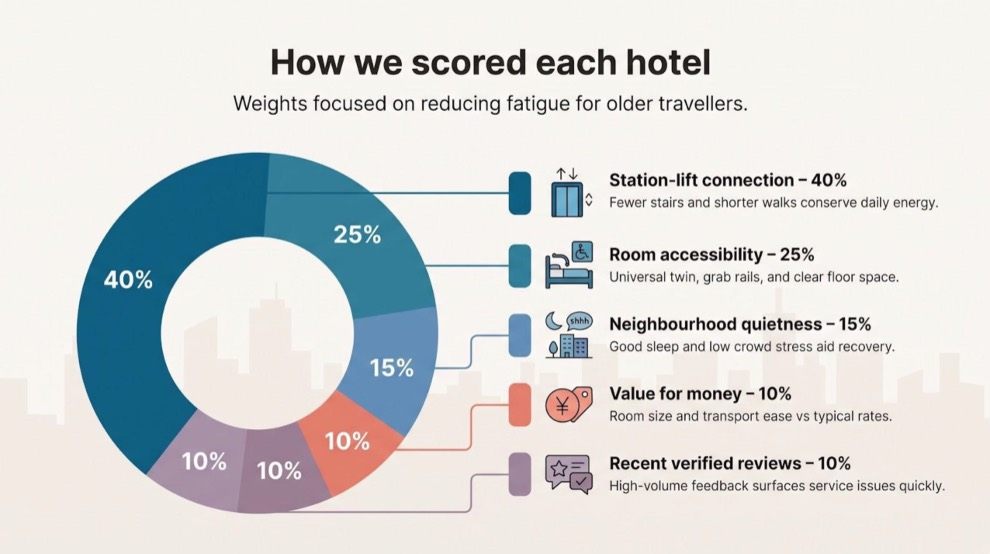
- Station-lift connection (40 percent): Fewer stairs and shorter walks conserve daily energy.
- Room accessibility (25 percent): A universal twin with grab rails and clear floor space is essential.
- Neighbourhood quietness (15 percent): Good sleep and low crowd stress aid recovery.
- Value for money (10 percent): We compare typical yen rates against room size and transport ease.
- Recent verified reviews (10 percent): High-volume feedback flags service or soundproofing issues quickly.
According to the Ministry of Land, Infrastructure, Transport and Tourism, over 90 percent of Japanese stations handling 3,000 or more daily passengers are now step-free. Yet finding the exact elevator exit remains crucial to avoiding fatigue.
On these weights, Royal Park, Gotanda Mets, and Toyosu Premier sit close together at the top, with Asakusa Tobu and the new Oimachi Tracks close behind. The weights guide you, but neighbourhood mood and the ease of reserving the lone adapted twin may influence your final choice.
A side-by-side look at the front-runners
The summary below lets you compare walk distance, room size, and airport options at a glance.
- Royal Park: Lift at Suitengumae, Hanzomon Line Exit 4; walk of 50 m or less with no steps. Twin beds with a published bed height of 56 cm. Upscale price tier. T-CAT airport bus next door. Key drawback: accessible twins are limited.
- Gotanda Mets: JR Gotanda Central Gate; walk of 75 m or less with no steps. Twin beds. Mid-range price tier. Airport by rail only. Key drawback: a busier nightlife strip outside.
- Toyosu Premier: Toyosu Station via LaLaport (indoor); walk of 100 m or less with no steps. Accessible twin of about 30 m². Upscale price tier. Airport buses nearby. Key drawback: an extra lift ride to the lobby.
- Asakusa Tobu: Asakusa Station, Ginza Line (confirm the lift exit); walk of 100 m or less with no steps. Ask the hotel about the bed setup. Mid-range price tier. Keisei rail nearby. Key drawback: confirm the bed layout before booking.
- Oimachi Tracks: JR Oimachi Tracks Gate (indoor); walk of 100 m or less with no steps. The hotel opened March 28, 2026, and has not yet published its universal-room details. Mid-range price tier. Rail to the airport via Shinagawa. Key drawback: room specs still pending.
Three points to note:
- Every route is step-free. Tokyo Metro’s “one-route” badge can include ramps or stairlifts; we require a standard elevator at the stated exit.
- Royal Park publishes its audited bed height (56 cm), helpful if your parent needs a higher perch to stand.
- Room rates change daily; the tiers are only a guide, so confirm a live price once you have the right room type.
Royal Park Hotel, Suitengumae - best overall ease
Exit the Hanzomon Line at Suitengumae, follow signs to Exit 4, and a lift opens onto the hotel’s basement corridor. In about 50 paces you reach the lobby with no stairs, road crossings, or chance of rain.
The setting is calm yet central. Nihonbashi’s restaurants sit a block away, while the streets grow quiet by bedtime so parents can recharge.
Inside the accessible twin
- Spacious twin with clear space around both beds
- Mattress height 56 cm (Tokyo accessibility audit)
- Shower chairs and bath aids available to borrow
Little extras that matter
- T-CAT airport coaches stop next door, letting you roll luggage straight onto buses for Haneda or Narita.
Watch-outs
Adapted twins are limited, so book early. Decor leans classic and corridors show light wear, but service stays attentive; staff can escort guests to the platform on request.
Royal Park suits travelers who value certainty over fashion. Secure the room and take a screenshot of the route before you fly.
JR-East Hotel Mets Premier Gotanda - best for daily rail travel
Step off the Yamanote Line, leave the central JR gate, and the hotel entrance sits about 20 strides to your left, with no exposure to weather, curbs, or detours.
Inside the universal twin
- Premium Twin (Universal) room placed closest to the lift
- Door opens inward without a heavy pull, with room beside the bed to turn a wheelchair
- Staff available by phone around the clock to arrange the room
What to expect outside
Gotanda hums after dark with casual bars and chain eateries, but double glazing keeps rooms quiet. Request a mid-floor for distance from platform announcements below and rooftop AC units above.
Airport access
- Haneda: about 25 minutes via one change at Shinagawa
- Narita: about 70 minutes via Yamanote plus Keisei lines
There is no coach stop, but the roll-free start inside the station offsets the transfer.
Watch-outs
Universal twins are limited, so book early. The immediate block feels commuter-functional rather than scenic, yet it suits parents who prize a painless rail link over boutique character.
Mitsui Garden Hotel Toyosu Premier - best for quiet nights and extra space
Toyosu feels like Tokyo on a deep breath: wide sidewalks, bay breezes, and more strollers than salarymen.
Getting there
Ride the Yurakucho Line to Toyosu, follow signs toward LaLaport, and an indoor route leads straight to the building, dry and step-free from train door to hotel lift.
Inside the accessible twin
- Accessible twin of about 30 m², with a turning space for wheelchairs
- Step-free entrance with an inward-swinging door
Quiet benefits
Upper floors face the skyline, while street-level traffic stays hushed after dark so parents wind down easily and wake rested.
Airport link
Airport limousine buses serve the Toyosu area (check the current stop), and taxis bypass central congestion through the bay tunnel.
Trade-offs
- Yurakucho Line often needs one change for Shibuya or Shinjuku
- Lobby sits on a high floor, adding one lift ride before bed
If elbow room and evening calm matter more than doorstep nightlife, Toyosu Premier offers a roomy, rail-free haven without isolating you from Tokyo’s highlights.
Asakusa Tobu Hotel - best for tradition on a sensible budget
Senso-ji lanterns, river boats, and rickshaw clicks sit minutes away, yet the hotel keeps comfort high and costs low.
Getting there
Take the Ginza Line to Asakusa Station; the hotel is about a one-minute walk from the exits. Check the Tokyo Metro accessibility search for the lift exit before you travel.
Inside the accessible room
- Ask the hotel which accessible layouts it offers and whether shower chairs are available
- Confirm the bed type: if parents need separate beds, ask about twins or adjoining rooms
Everyday savings
Street food, supermarkets, and family eateries keep daily costs down. Evenings stay calm, and flat sidewalks suit slower walkers.
Airport links
- Narita: Keisei Access Express from the Toei Asakusa Station nearby
- Haneda: about 60 min with one change; taxi rank at Kaminarimon for late returns
Trade-offs
Midday tourist waves can crowd sidewalks, so visit temples early or late. Three different “Asakusa” stations share the name; screenshot the Ginza Line exit map before you fly.
For parents who prefer temple bells to neon and want to stretch their yen, Asakusa Tobu blends old Tokyo charm with modern accessibility.
Hotel Metropolitan Oimachi Tracks Tokyo: best newcomer for effortless arrivals
Opened March 28, 2026, this hotel anchors the new Oimachi Tracks complex and suits travelers who prefer smooth logistics over five-star frills.
Getting there
JR Oimachi Station’s “Tracks Gate” connects directly to the building. Step off the Keihin-Tōhoku or Rinkai Line, ride one lift, and reach reception in under two minutes, fully indoors.
Early room picture
- The hotel has 285 rooms; call ahead to confirm an adapted layout if a wheelchair room is essential
Airport edge
Shinagawa is one stop away on the Keihin-Tōhoku Line, and Keikyū trains run from there to Haneda. Ask the hotel about airport bus options when you book.
Trade-offs
Review volume is still low, so long-term service consistency is unproven. The glass-and-steel setting can feel clinical next to old-town districts.
If you want opening-day infrastructure, luggage-friendly floors, and a station that avoids the Yamanote crush, Oimachi Tracks is a strong fit. Just confirm the adapted room specs before you book.
Picking the right neighborhood for older visitors
Tokyo’s districts feel like villages connected by rail. Choose wisely and even rest days feel like sightseeing.
- Suitengumae / Nihonbashi: Flat sidewalks, quiet after 7 pm, T-CAT airport coaches on the block, temples and Ginza ten minutes by Hanzomon Line. Trade-off: limited evening buzz; décor leans business rather than boutique.
- Gotanda: Yamanote Line at the door; compact concourses avoid Tokyo or Shinjuku sprawl. Trade-off: chain cafés, plus mild nightlife noise; request a mid-floor room.
- Toyosu: Bayside promenades, plenty of benches, indoor mall dining, airport buses nearby. Trade-off: one transfer needed for many west-side sights; lobby on a high floor.
- Asakusa: Flat streets, lift-to-lanterns in about 5 min, river taxis add seated sightseeing. Trade-off: midday crowds; three stations share the name, so screenshot the Ginza Line exit map.
- Oimachi: Direct JR to Shinagawa (one stop), compact station easy to cross. Trade-off: glass-and-steel vibe; limited historic atmosphere.
Airport transfers that spare older legs
A hotel is only as easy as the journey that gets your parents there. Pick the right transfer and they will arrive with energy to explore.
- Royal Park (Suitengumae): T-CAT limousine bus next door. About 55 min to Narita or 25 min to Haneda, no changes, covered all the way.
- Toyosu Premier: Airport limousine bus (confirm the stop). About 70 min to Narita or 25 min to Haneda, no changes, mostly covered.
- Oimachi Tracks: JR to Shinagawa, then Keikyū. About 30 min to Haneda with one change, indoors.
- Gotanda Mets: Yamanote Line to Shinagawa (use the lift), then Keikyū. About 25 min to Haneda with one change, indoors.
- Asakusa Tobu: Keisei Access Express. About 60 min to Narita, no changes, with a street-level lift to the platform.
Tip: If your return flight leaves before 10 am, book the final night at The Royal Park Hotel Tokyo Haneda, located inside Terminal 3, so departure day is a five-minute walk rather than a dawn dash.
The room-accessibility checklist
Before you click “pay,” run through these seven questions by phone or email and write down every answer:
- Room name: Is the adapted room labeled universal, accessible, or barrier-free on your confirmation?
- Bed clearance: Can you walk around both sides without moving luggage?
- Bed height: Is the mattress top 50-60 cm from the floor (easy sit-to-stand range cited in Tokyo accessibility audits)?
- Bathroom entry: Any raised threshold? Roll-in shower or deep tub? Fixed grab rails and shower chair available?
- Seating: Does the room include a supportive chair with arms (not only the bed)?
- Night lighting: Is there automatic, low-level light on the path from bed to bathroom?
- Emergency call: Where are the call buttons, and how will staff respond?
How to read a Tokyo station map without getting lost
Follow these five checks before you step off the train:
- Confirm the operator logo. Tokyo Metro, JR, Toei, and private lines publish separate maps; use the one that matches your ticket.
- Find the platform-to-gate lift. On Tokyo Metro diagrams it hides behind a small circle-and-E symbol. Miss it and you may face stairs.
- Note the gate name. Copy “CENTRAL GATE” or “NORTH EXIT 3” onto your phone; you can quote it to staff if signs are crowded.
- Locate the surface lift. Follow the thickest line from your gate, and check hours; some lifts close late. If only a ramp appears, revisit our hotel comparison for another exit.
- Save two screenshots: one of the full map and one zoomed on the lift route. Offline images beat patchy station Wi-Fi every time.
Run this drill once at home and you will step off the carriage already knowing where daylight and your parents’ hotel wait.
FAQs
Are all Tokyo Metro stations accessible?
Tokyo Metro stations generally have at least one step-free route, but that path may hide behind a single lift or even a chairlift. Always check the exact exit we list for your hotel.
Does every exit have a lift?
No. A station can list 15 exits and only one elevator. Miss it and you will face stairs the marketing copy never mentioned.
Is Tokyo Station suitable for older parents?
It works, but the concourses are airport-scale. Smaller hubs like Gotanda mean far less daily walking.
Is Shinjuku too difficult for older parents?
Shinjuku feels like a small city. Confident walkers cope, but our shortlist favors stations you can cross in minutes, not marathons.
Which Tokyo area is quietest for older visitors?
Toyosu. Wide bayside promenades, plenty of benches, and early-closing shops make sleep simple.
Asakusa or Ueno: which is easier?
Asakusa. Flat streets and a hotel a minute from the station. Ueno demands careful exit hunting and longer indoor walks.
Can I book an accessible room online?
Often, yes, but universal rooms are few. Once you have picked the room, email or phone the hotel to confirm it is held for your dates before paying.
What is a “universal room” in Japan?
A room that meets local wheelchair standards (≥85 cm door, grab rails, emergency call buttons). Details vary, so use our checklist.
Are Japanese hotel beds low?
Business-hotel beds often sit under 50 cm. Our picks hover nearer the 50-60 cm comfort range; Royal Park publishes 56 cm.
Will the hotel lend a shower chair?
Most of our shortlisted hotels will, but stock is limited. Reserve one when you reserve the room.
Should parents stay near Haneda the night before departure?
If the flight leaves before 10 am, yes. One night at an attached terminal hotel such as The Royal Park Hotel Tokyo Haneda turns a dawn taxi into a five-minute indoor walk.
How far from a station is reasonable for older travelers?
We cap it at ≤250 m of flat, step-free ground. Longer walks become a chore by day three.
Do these hotels provide nursing or medical care?
No. Staff can handle basic needs and call an ambulance but are not healthcare providers. Note the nearest 24-hour hospital.
What if a station lift breaks?
Alert station staff; they will guide you to an alternate route or arrange street-level help. Budget an extra ten minutes just in case.
Wrapping up and booking with confidence
You have narrowed Tokyo to five senior-friendly bases:
- Royal Park for doorstep lifts and airport buses
- Gotanda Mets for the Yamanote at your feet
- Toyosu Premier for bay breezes and larger rooms
- Asakusa Tobu for shrine bells on a budget
- Oimachi Tracks for a brand-new, fully indoor arrival
Before you book:
- Pick the hotel whose lift route matches your parents’ pace.
- Email or call to reserve the named universal or accessible room, and ask for the current bed height and shower-chair availability.
- Screenshot the platform-to-street lift path and keep it offline for arrival day.
Compare refundable rates as soon as your dates are set; Tokyo inventory moves fast, so secure the room in writing. With those three steps complete, you will land knowing every transfer, door width, and lift button in advance.