





A Balanced Play Diet: The Five Types of Play Every Child Needs
Parents spend a lot of time thinking about what children eat and far less about how they play. Yet play works a bit like a diet. A child who only ever does one type tends to miss out on something, and a good mix covers more ground than any single activity.
There’s no formal rule, and children will always lean towards what they enjoy. But thinking in terms of a balanced play diet is a useful way to check that nothing is being left out, and it’s a handy guide when you’re choosing presents.
Physical play
This is anything that gets the body moving: running, climbing, jumping, riding, throwing. It builds strength, balance and coordination, and it uses up energy that would otherwise come out somewhere inconvenient, like the dining room.
Wheeled toys are among the best examples, because they combine balance, steering and speed in a way that’s hard to copy. A first proper bike is a milestone, and a good range of kids’ bikes means you can match the wheel size to your child’s height rather than guessing from their age. A child should be able to sit on the saddle and touch the ground with the balls of both feet, and reach the brakes without stretching.
For younger children, simple things work just as well: balls, bean bags, a hoop, a low climbing frame at the park. What matters is regular access rather than any particular piece of equipment.
Imaginative play
This is where children invent: stories, characters, situations. It’s the type of play that looks least like work and often does the most. Children rehearse conversations, try out different roles and work through feelings they can’t yet put into words.
Dolls and small world toys are the classic route in. A doll set with furniture and accessories gives a child a ready-made setting, so the story can begin straight away. Dressing up, play kitchens and cardboard box shops do the same job on a smaller budget.
Leave it alone as much as you can. The best contribution an adult can make is usually a prompt, such as “what’s for dinner today?”, followed by a step back.
Creative play
Drawing, painting, modelling, cutting and sticking. The point is the process rather than the finished product, though it’s worth displaying the results all the same. Creative play builds fine motor skills and gives children a way to express themselves without needing words.
Keep a basic supply within reach: paper, crayons, glue, scissors, clay. Children are far more likely to start something if the materials are already out on the table.
Constructive play
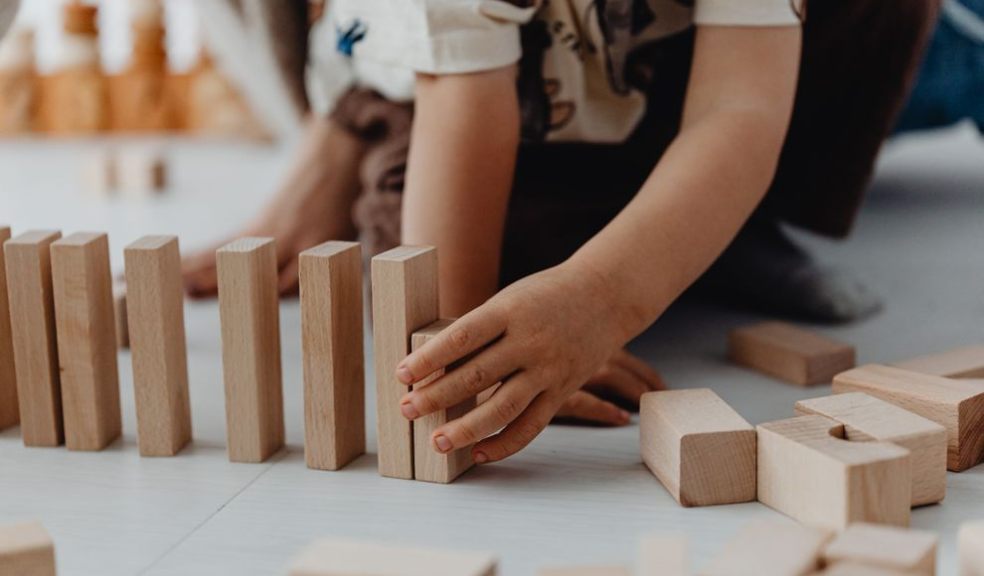
Building things with blocks, bricks, magnetic tiles, cardboard and sticks is problem solving in disguise. A child working out why a tower keeps falling over is doing early engineering, and learning that getting it wrong is part of the process.
This type of play grows with the child. The same set of bricks makes a simple wall at three and an elaborate model at nine, which makes construction toys unusually good value.
Quiet and rule-based play
Puzzles, board games, card games and books teach patience, turn taking and how to lose gracefully, which is harder than it looks. Games with simple rules and short rounds work best for younger children, since staying power is limited.
This is also the type of play that brings families together. A game round the table needs no equipment beyond the box.
Spotting a gap
You don’t need to measure any of this. Just step back occasionally and ask what’s been missing lately. If a child has spent weeks indoors building, a bike ride might be overdue. If they’ve been outside constantly, a quiet afternoon with a puzzle could be welcome.
A few signs can point to an imbalance. A child who’s restless and snappy after a long stretch indoors probably needs to move. One who struggles to settle to anything may benefit from a calm, structured activity. And one who says they’re bored but turns down every suggestion may simply want something new in the mix.
How the seasons change the mix
Seasons shift the balance naturally. Winter tends to bring more indoor play, summer more physical play, and that’s fine as long as the gaps get filled eventually. Rotating toys can help here too. Putting half of the collection away and bringing it back a few weeks later often revives interest in a category that’s gone quiet.
Using it when you buy presents
The balanced approach is particularly useful at birthdays and Christmas, when it’s tempting to buy several items from the same category. If a child already has plenty of building sets, look at something from a different list. A mix of types gives a pile of presents more staying power than a heap of near-identical toys.
Don’t overthink it
None of this needs to become a project. Children choose what they need more often than not, and given time, space and a few open-ended things, most will cover the ground themselves. The diet idea is just a nudge to make sure the options are there.
Collaborative post.