






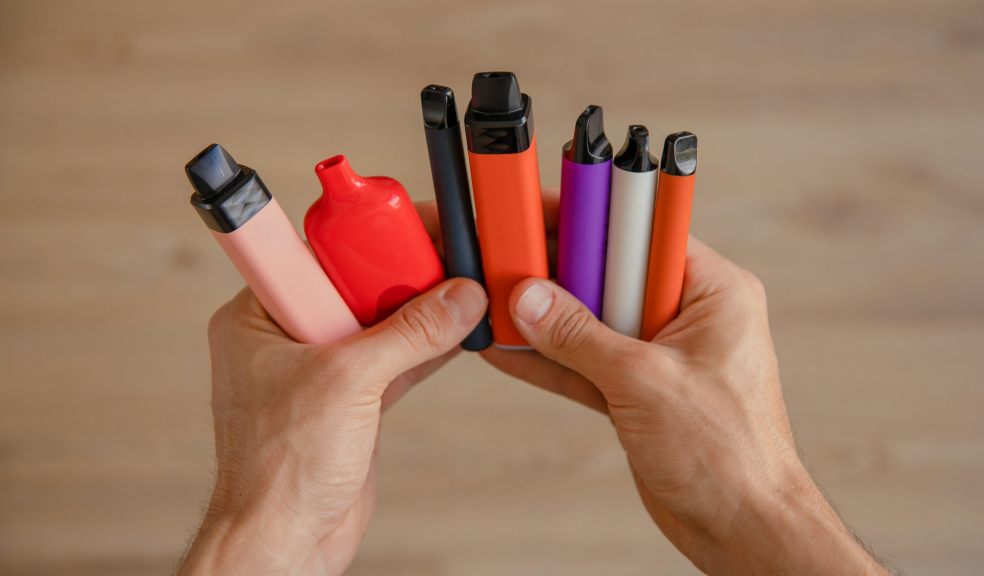
The Dead Vape in the Kitchen Drawer: Why Lithium-Ion Batteries Belong on Your Home Safety Checklist
Home safety checklists tend to cover the obvious risks: smoke alarms, overloaded sockets and chargers left plugged in overnight. A dead vape tucked away in a kitchen drawer rarely gets a mention.
In a recent UK survey, one respondent aged 65 or over from Southampton described keeping a pile of broken vapes in a kitchen cupboard. It is easy to see how that happens. A device stops working, gets put aside and is forgotten.
But it is worth checking what is in that drawer. Disposable and rechargeable vapes both contain lithium-ion batteries.
What the Survey Found
A survey carried out for übbs found that 56% of the UK adults surveyed had never really thought about where a vape battery goes, even though 62 percent knew that a disposable vape contains one. The übbs research asked 1,001 adults across the UK about vape waste, battery disposal and recycling habits.
When asked what they would do with a used vape, 31 percent said they would take it to a suitable recycling point. Another 30 percent would put it in general waste and 16 percent in household recycling. That means 46 percent said they would dispose of it incorrectly. These figures show how knowing a battery is present does not always translate into correct disposal.
Most respondents recognised the wider issue. Some 73 percent said vape waste was at least somewhat of a problem, including 34 percent who considered it a big problem. Knowing how to deal with it, however, is another matter.
There were differences between age groups. Among those aged 35 to 44, 75 percent knew vapes contain batteries. For respondents aged 65 and over, that fell to 46 percent, while a further 46 percent were unsure.
Regional differences were clear too. In Scotland, 45 percent said they would use a recycling point, compared with 20 percent in South West England. A third of respondents in the South West were unsure what they would do.
Why a Dead Vape Is a Home Safety Question
Fire service advice on lithium-ion batteries covers charging, storage, damage and disposal. On disposal, the Scottish Fire and Rescue Service says lithium-ion batteries should never go in household waste, because damaged or crushed batteries can start fires in bin lorries and landfill sites. Buckinghamshire Fire & Rescue Service says specifically that used vapes should never be placed in household bins or recycling, and that incorrectly disposed vapes are an increasing cause of fires in the waste and recycling sector.
The Scottish service also advises storing batteries and battery-powered devices away from escape routes and extreme temperatures. Warning signs include swelling, leaking, unusual smells, hissing, smoke or excessive heat. If a vape shows any of these signs, do not use or charge it. Seek advice from your local council or an appropriate recycling service about safe disposal rather than placing it straight into a collection bin.
Disposable or Rechargeable, the Same Rule Applies
There is an important distinction between the devices. Single-use vapes have batteries that cannot be recharged, or designs that cannot be refilled, and were not intended for repeated use. Reusable vapes, including many pod systems, have rechargeable batteries and refillable containers.
Neither belongs in household waste or ordinary household recycling. Both contain materials, including lithium, that can be recovered through specialist recycling.
Fewer Vapes Are Being Thrown Away, but Old Devices Remain
Single-use vapes could no longer be sold in the UK from 1 June 2025, according to GOV.UK guidance. Material Focus estimates that vapes and pods thrown away or incorrectly recycled each week fell from 8.2 million in 2024 to 6.3 million in 2025. That is still roughly 10 devices every second.
The reduction followed the ban, although the figures alone do not show how much of the change it caused. Older devices may still be sitting in cupboards and drawers, while rechargeable models and pods remain in use. The need for proper disposal has not gone away.
Where a Dead Vape Should Go
Under the same GOV.UK guidance, retailers that sell vapes must offer a take-back service and accept vapes and vape parts, such as used pods, coils or batteries, that customers return for recycling. Household waste recycling centres and dedicated electrical or battery recycling points are other options, although what each accepts can vary, so it is worth checking your local council's guidance before you go. Some manufacturers also run their own take-back or postal schemes.
Buckinghamshire Fire & Rescue Service's advice is to take used vapes to an approved vape, battery or electrical recycling collection point. A built-in battery is not designed to be removed by the person using the device, so hand over the whole vape rather than trying to take it apart.
What Would Make It Easier
The survey also explored what would help people dispose of vapes responsibly. A cash-back or deposit scheme was the most popular option, chosen by 33 percent, followed by more recycling points in shops at 31 percent. Clearer labelling attracted 16 percent, a council collection service 10 percent, and 9 percent said nothing would change their behaviour. In Northern Ireland and Belfast, 50 percent chose a cash-back or deposit scheme.
The message is practical: advice matters, but convenient collection points could make a real difference. Some respondents also said an incentive would help.
A Quick Check Before You Close the Drawer
Check the kitchen drawer, coat pockets and the bottom of any bags for vapes that are no longer used. An undamaged device can be taken to a suitable retailer take-back point or recycling centre. If a device is swollen, leaking, unusually hot or smells strange, do not use or charge it. Contact your council or a specialist recycling service for advice on handling it safely.
For adults considering alternatives to vaping, nicotine pouches such as those from übbs contain no batteries or electronic components. There is no lithium-ion battery to dispose of, although used pouches and their packaging still need to be discarded responsibly.
Collaborative post.