






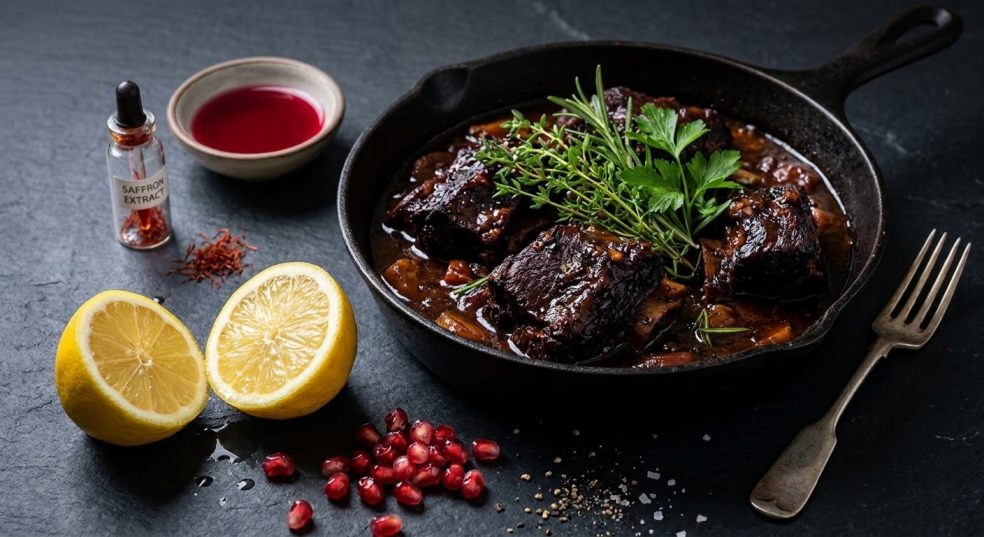
Why Acidity Matters in Rich Braised Meat Dishes
Rich braised meat dishes are known for their deep flavours, tender textures and comforting sauces. However, slow cooking can produce a dish that feels overly heavy when those rich elements are not balanced. Acidity helps by introducing contrast, sharpening flavours and preventing the sauce from becoming too intense. Understanding how acidic ingredients work allows you to create braised meat dishes that taste full-bodied without overwhelming your palate.
Balances the Richness of Braised Meat
Slow-braised cuts often contain collagen and fat that contribute to their tenderness and rich mouthfeel. As the meat cooks, collagen gradually converts into gelatine, giving the cooking liquid a fuller texture. While these qualities make braised dishes satisfying, they can also leave the flavours feeling heavy.
Acidic ingredients provide contrast without removing the richness. You can see this balance in slow-braised lamb shanks with rosemary, where red wine and balsamic vinegar contribute acidity that complements the lamb's savoury depth. The result is a more balanced combination of tender meat, aromatic herbs and a rich sauce.
Brings Clarity to Slow-Cooked Flavours
Braising allows meat, vegetables, herbs and cooking liquids to develop a concentrated flavour profile over several hours. However, prolonged cooking can soften the distinctions between individual ingredients, making the overall taste seem less defined.
Acidity introduces a contrasting flavour that helps you distinguish these layers. Wine contributes tartness alongside its characteristic fruit notes, while tomatoes provide acidity with a natural sweetness and savoury depth. Rather than competing with the meat, these ingredients help its flavour remain noticeable alongside the other components.
The key is moderation. Excessive acidity can dominate a dish, while too little may leave the flavours tasting flat.
Influences Meat Texture During Braising
The tenderness of braised meat comes primarily from gentle, prolonged cooking, which allows connective tissue to soften. However, the acidity of the cooking liquid can also influence how meat proteins behave during heating.
Acidic ingredients alter the pH of the braising liquid, potentially affecting protein structure and moisture retention. Their influence depends on the concentration of acid, the cut of meat and cooking conditions. Adding more vinegar or wine does not automatically produce more tender results.
You should therefore treat acidity as a supporting element rather than a substitute for appropriate cooking temperatures and sufficient braising time.
Helps Prevent Overly Heavy Sauces
A braising sauce becomes more concentrated as liquid evaporates, particularly when you remove the lid or reduce the cooking juices after the meat is tender. This reduction intensifies savoury compounds, seasoning and acidity, creating a fuller flavour and thicker consistency.
Without sufficient contrast, the resulting sauce may taste excessively rich. Acidity helps maintain balance, but reduction can also make an already acidic sauce too sharp.
Taste the sauce after reducing it rather than judging its flavour solely at the beginning. You can then determine whether it needs additional acidity, more cooking liquid or a minor seasoning adjustment.
Makes Final Seasoning More Precise
Acidity is valuable because you can introduce it at different stages of braising. Wine, tomatoes and certain vinegars work well in the cooking liquid, where their flavours gradually integrate with the meat and aromatics.
A small addition of lemon juice or vinegar near the end can provide a fresher, more noticeable contrast. However, the amount should reflect the acidity already present in the sauce.
Taste before making adjustments, particularly when your recipe contains wine or tomatoes. Adding acidic ingredients gradually gives you greater control over the finished flavour without making the dish unnecessarily sour.
Better Braising Depends on Balancing Acidity
Acidity is essential to rich braised meat dishes because it balances fat, defines slow-developed flavours and contributes to a more harmonious sauce. Its influence on texture and seasoning also makes it an important consideration throughout cooking. By selecting suitable acidic ingredients and adjusting their amounts carefully, you can create braised dishes that retain their comforting richness while tasting balanced from the first mouthful to the last.
Collaborative post.