





Meaningful Gifts for Scottish Descendants Abroad
Key Takeaways
- Heritage gifts land better when they connect to a specific clan, tartan, or family story rather than generic "Scottish" branding
- Life events like weddings, graduations, and retirements are the moments when identity-driven gifts matter most
- Authenticity (real tartans, proper provenance, honest materials) matters more to this audience than flashy packaging
- Personalisation - an engraving, a name, a clan crest, turns an ordinary item into something someone actually keeps
- The Scottish diaspora is enormous, which means demand for thoughtful heritage gifts isn't a niche trend; it's a lasting market
Why Heritage Still Matters So Much
Ask someone with Scottish roots where their family "came from," and you'll usually get more than a country name. You'll get a glen, a surname, maybe a tartan pattern their granny mentioned once. That specificity is the whole point.
According to the Scottish government, upwards of 40 million people worldwide consider themselves to have Scottish ancestry, a number that dwarfs Scotland's own population of just over five million. That's a lot of people who feel a pull toward home even though they've never lived there.
So what does that mean for gift-giving? It means the usual shortcuts, a plaid scarf, a shortbread tin, a "Kiss Me I'm Scottish" mug, tend to fall flat with this crowd. They've seen it all before. What actually lands is something that feels specific to them.
What Makes a Gift Feel Personal, Not Generic
The role of family stories
Most Scottish descendants didn't grow up in Scotland. They grew up hearing about it. A grandparent's accent, a surname that got mispronounced at school, a vague sense that "we're MacDonalds" without knowing much beyond that.
A gift that taps into that story does more work than one that doesn't. Think clan crest cufflinks instead of a plain tie clip. Think a tartan tied to an actual surname rather than a generic "Highland" pattern picked because it looked nice on a shelf.
Symbols that carry meaning
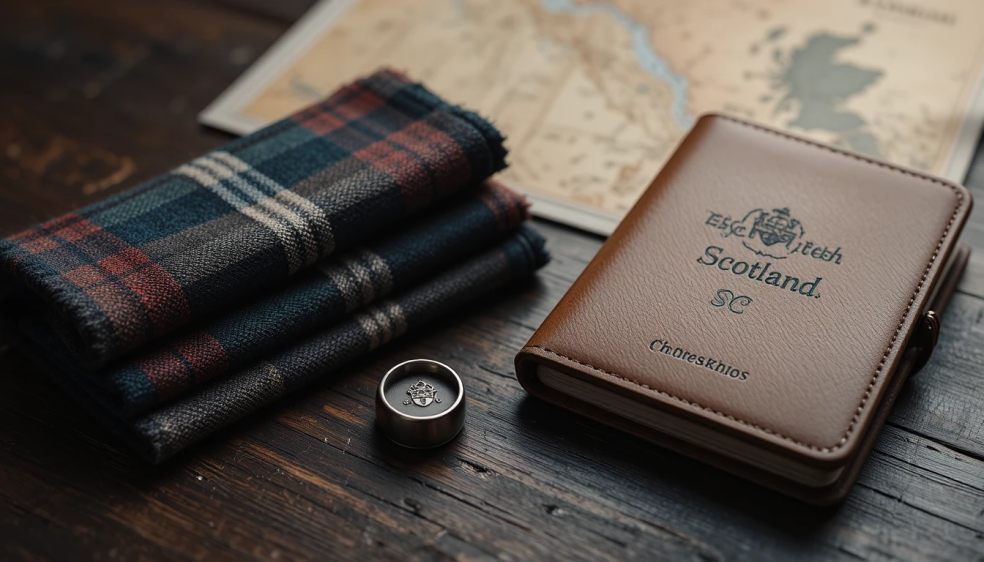
Tartan is the obvious one, and for good reason. Each pattern is historically linked to a clan, region, or in some cases a specific family. Give someone a tartan tied to their own name, and you've given them something a department store simply can't replicate.
Bagpipes, thistles, the Saltire - these all carry weight too, but they're broader symbols. They say "Scottish" in general. A named tartan says "this is yours."
Popular Gift Categories for the Scottish Diaspora
Tartan and clan-based items
This is the deepest category, and it stretches well beyond kilts and scarves. Watch straps, wallets, bag tags, and jewellery boxes lined in tartan have all become popular precisely because they're wearable and useful rather than decorative-only.
One example worth mentioning: MacKinnon Watches builds its collection around this idea, offering a personalised tartan watch where the strap uses tartan sourced from Scottish mills, chosen to match a specific clan or family name. It's a practical everyday item with a heritage detail built in, which tends to work better as a gift than something purely ornamental that sits in a drawer.
Larger retailers like Scotland Shop cover similar ground with tartan blankets, ties, and homeware, so there's genuine choice depending on what the recipient actually wants to use day to day.
Jewellery and everyday accessories
Necklaces and rings featuring Celtic knotwork, thistle motifs, or clan crests are a reliable middle ground. They're subtle enough to wear daily and specific enough to mean something.
Cufflinks deserve a mention too. Understated, professional, and a nice option for someone who'd feel awkward in anything more overtly tartan at the office.
Books, food, and drink
Not everything needs to be wearable. A well-researched clan history book, a bottle of single malt from a specific region, or shortbread from an independent Scottish bakery all work well, especially paired with something more personal as a second gift.
Choosing a Gift for Major Life Moments
Weddings and anniversaries
Weddings are where heritage gifts tend to shine brightest. A tartan sash for the ceremony, matching accessories for the wedding party, or a custom piece engraved with the couple's names and wedding date all fit naturally into a day that's already about tradition and family.
Don't overthink this one. Something simple, done well, beats something elaborate that misses the mark.
Graduations and retirements
These milestones mark a transition, and a heritage gift can act as a bridge between where someone's been and where they're heading. A watch engraved with a graduation date, or a retirement gift tied to a family clan, gives the moment a bit more permanence than a card and a bunch of flowers.
What to Look for When Buying Authentic Scottish Items
Not every "Scottish" product online is what it claims to be. Here's roughly what's worth checking before you buy.
- Where the tartan actually comes from. Genuine tartan is woven at Scottish mills, and reputable sellers will usually say so plainly rather than being vague about it
- Whether the tartan is tied to a real, registered pattern or just a generic plaid dressed up with Scottish branding
- Whether personalisation options (engraving, monograms, clan crests) are offered, since this is often what separates a memorable gift from a forgettable one
- Reviews and reputation, particularly from customers in the diaspora communities themselves, since they tend to know the difference between authentic and imitation
Depending on your situation, budget will factor in here too. Not every gift needs to be expensive to feel meaningful. In most cases, a smaller item with real thought behind it beats a pricier one picked in a hurry.
Practical Tips for Buying From Abroad
If you're buying from outside the UK, a few things are worth sorting out ahead of time. Shipping times vary a lot depending on the item and whether it's custom-made, so build in extra weeks if you're ordering for a wedding or a specific date. Custom or personalised pieces often can't be returned once made, which is standard practice across the industry, so double-check names, dates, and spellings before confirming an order.
Currency and duties are worth a glance too, particularly for US and Canadian buyers, since some sellers include these costs upfront while others don't.
Frequently Asked Questions
What is the most meaningful gift for someone with Scottish heritage?
There's no single answer, but items connected to a specific clan or family name tend to mean more than generic Scottish-themed gifts. Personalisation, an engraving, a name, a clan tartan, makes a noticeable difference.
How do I find out which tartan belongs to my family?
Start with your surname. Many clans have one or more registered tartans, and resources like the Scottish Register of Tartans list official patterns tied to specific names and regions. If your surname doesn't have a direct match, a "universal" or district tartan is a reasonable alternative.
Is tartan the same as plaid?
Not quite. Plaid is a general term for a checked pattern. Tartan specifically refers to patterns with historical ties to Scottish clans, regions, or organisations, generally woven in Scotland using traditional methods.
What gifts work well for a Scottish-themed wedding?
Tartan sashes, kilts, matching accessories for the wedding party, and personalised jewellery or watches are common choices. Many couples choose a tartan tied to one partner's family name rather than a generic option.
Are custom tartan items expensive?
Pricing varies widely depending on the item and the level of personalisation. Watch straps and accessories tend to sit at a more accessible price point than full kilts or formal wear, and many sellers offer several tiers depending on materials and customisation.
Can I buy authentic Scottish tartan items outside the UK?
Yes. Most reputable Scottish brands ship internationally, which matters given how large the diaspora is in the US, Canada, and Australia. Just factor in longer delivery windows for custom or made-to-order pieces.
Do clan tartans only apply to specific surnames?
Mostly, yes, though many clans have several associated septs (related surnames) that can also claim the tartan. If you're unsure whether your surname connects to a clan, a quick search through the Scottish Register of Tartans or a clan society website usually clarifies it.