






Fine vs Gross Motor Skills: Activities to Build Both at Home
Fine motor skills are all about the tiny muscles in your toddler’s hands and fingers, like pinching a Cheerio or scribbling with a crayon.
Gross motor skills use the big muscles in their arms, legs, and core. If you’ve watched your kid climb off the couch or chase the dog, you’ve seen those in action.
Your toddler needs both types, but you don’t need a fancy setup to help them get there. Grab a laundry basket, some painter’s tape, and carve out fifteen minutes; you’ll be surprised how much you can do.
And if you’ve ever found yourself searching fine vs gross motor skills late at night because your toddler still can’t stack more than two blocks, you’re definitely not alone.
Here’s a real breakdown of what these skills are, what’s actually typical at each age, and, most importantly, how you can help right at home.
Fine vs Gross Motor Skills: What's the Real Difference?
Here’s the gist: gross motor skills involve big movements like crawling, walking, jumping, climbing, or tossing a ball.
They use your large muscles legs, arms, core and need balance and coordination. Fine motor skills are all about small, precise actions, like picking up a raisin with your fingers, turning a doorknob, holding a spoon, or stacking blocks.
These depend on the tiny muscles in your hands and wrists, plus good teamwork with your eyes.
Here's the part most articles skip: these two skill sets aren't separate tracks running in parallel. Gross motor skills actually come first and build the foundation fine motor skills stand on.
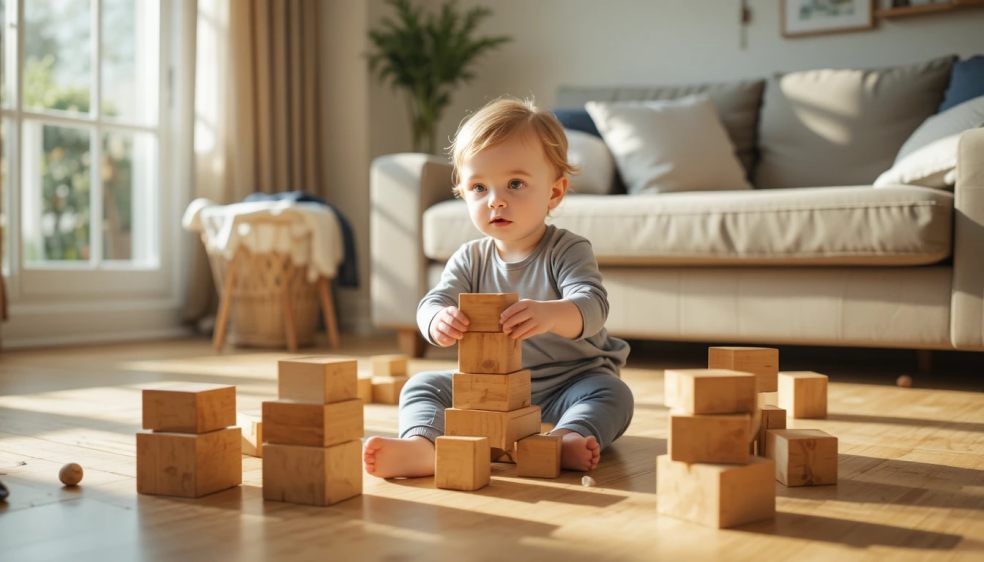
A toddler who can't yet sit steadily on their own is going to struggle to use both hands together to stack blocks, simply because so much of their effort is going into staying upright.
Core strength and balance free up the hands to do finer work. That's why pediatric occupational therapists often start with big-body activities even when the actual complaint is “my kid can't hold a crayon.”
Why Toddlers Need Both (Not Just One)
A common misconception about gross and fine motor skills is that fine motor is the "smart" skill (writing, drawing, school-readiness) and gross motor is just "wiggling", a waste of time for a busy parent. Just not true!
Gross motor skills are what allow the toddler to have confidence and independence, and to explore and learn.
Exploring is how toddlers learn about the world, and their place in it. Fine motor skills allow them to interact with it, feed themselves, turn pages, and eventually hold a pencil.
A toddler who has strength in one while being weak in the other will need more assistance in the weak skill, not less time to spend on it.
Milestones by Age: What to Expect
Every kid develops at their own pace, and there's a wide range of “normal.” Still, it helps to have a rough map.
12–18 months
- Gross: walks independently, squats to pick up a toy, climbs onto low furniture
- Fine: stacks 2 blocks, scribbles with a crayon, drinks from an open cup with help
18–24 months
- Gross: runs (sort of; it's more of a fast wobble), kicks a ball, walks up stairs holding a rail
- Fine: stacks 4–6 blocks, turns pages one at a time, uses a spoon with less mess
2–3 years
- Gross: jumps with both feet, pedals a tricycle, throws a ball overhand
- Fine: strings large beads, uses safety scissors with help, draws circles and lines
If your toddler is a few months behind in one area but hitting everything else, that's usually just their own timeline.
A pattern of falling behind across the board, or losing a skill they already had, is the kind of thing worth flagging to your pediatrician.
Gross Motor Activities You Can Do at Home
 You genuinely don't need equipment for most of this.
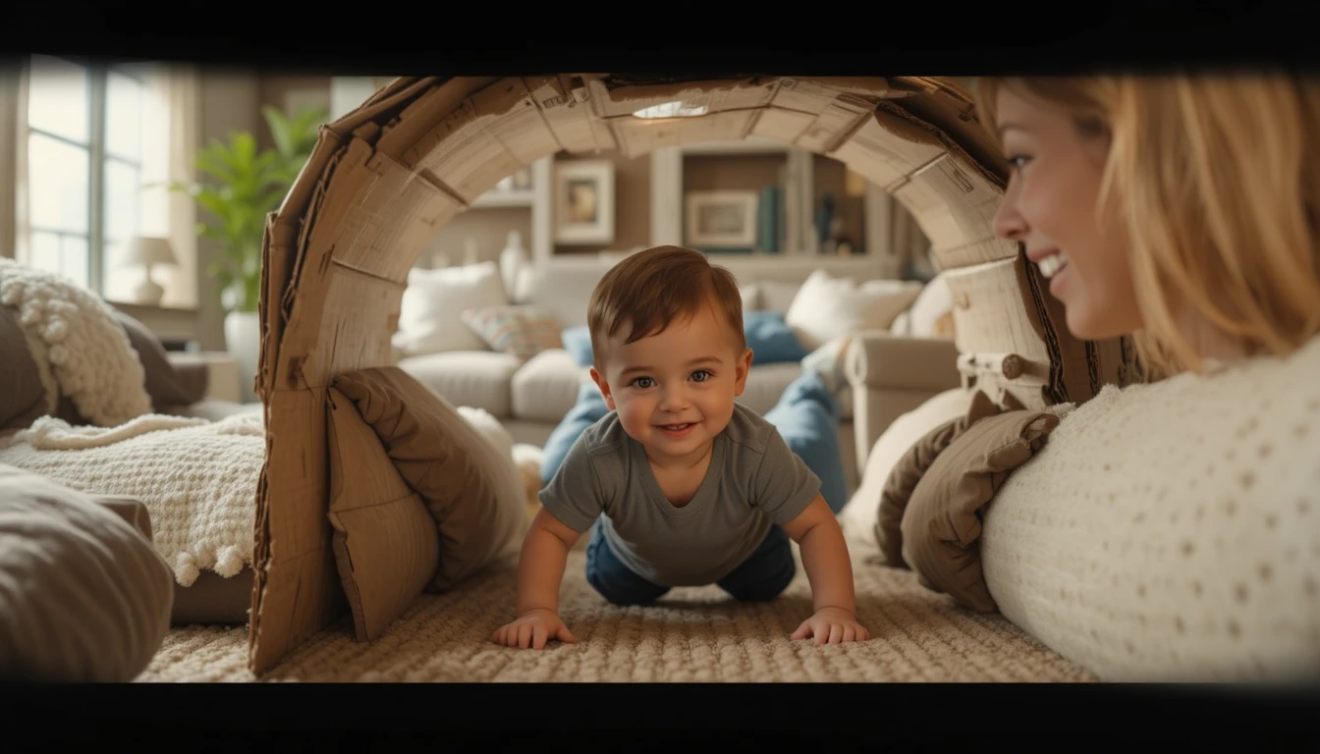
- Couch cushion obstacle course. Pile cushions on the floor, add a laundry basket “tunnel,” and let them climb over, crawl through, and jump off. This builds balance, coordination, and body awareness all at once.
- Painter's tape balance beam. Stick a strip of tape on the floor and have them walk heel-to-toe along it. Costs about a dollar and works on every hard floor in your house.
- Freeze dance. Music on, dancing, music off, freeze. Sounds simple — it's actually a great workout for balance and impulse control.
- Animal walks. Bear crawl to the kitchen, frog jump to the bathroom, crab walk to bedtime. Kids love the game more than the exercise, which is exactly the point.
- Ball toss into a basket. Start close, move the basket back as they improve. Works shoulder strength and hand-eye coordination, which sets up gross motor skills to hand off into fine motor ones.
Fine Motor Activities You Can Do at Home
 These are all things you probably already have in a kitchen drawer.
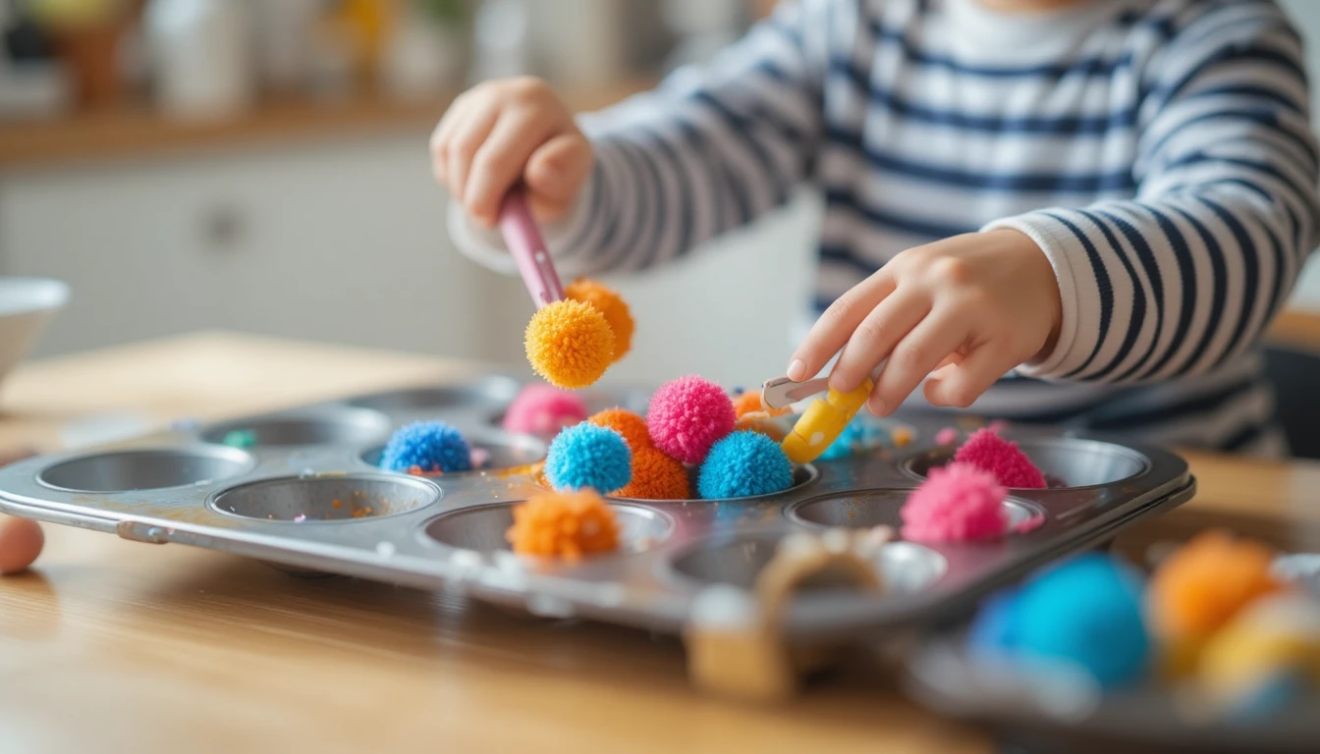
- Pom-pom transfer. Tongs or a clothespin, a muffin tin, a bowl of pom-poms (or cotton balls). Transferring one item at a time is a classic occupational therapy exercise disguised as a game.
- Sticker peeling. Peeling stickers off a sheet and sticking them on paper takes real finger strength and pincer control. It also buys you five quiet minutes, which is its own reward.
- Playdough squishing and rolling. Rolling snakes, squishing balls flat, pinching off small pieces playdough works nearly every small muscle in the hand.
- Pouring practice. Two small cups and some dry rice or water in the bathtub. Pouring back and forth builds wrist control and hand-eye coordination without needing a single toy.
- Threading pasta or large beads onto a shoelace. Cheap, reusable, and genuinely challenging for a toddler's developing pincer grip.
Toys That Build Both Skills at Once
You don't need a toy for every activity above, but a few well-chosen ones do double duty:
- Push-and-pull toys (a wagon, a pop-along toy) — gross motor for walking and steering, fine motor for gripping the handle
- Shape sorters and stacking rings — fine motor for grip and placement, plus balance if they're doing it while standing or squatting
- Ride-on toys — leg strength and coordination for pedaling or scooting, plus steering control in the hands
- Balls in a few different sizes — a big ball for kicking (gross motor), a small ball for throwing and catching (fine motor precision)
If you're building out a toy rotation, the goal isn't more toys; it's variety. A shelf with one option from each category above will get more genuine developmental mileage than a bin overflowing with things that all do the same job.
A Quick Story From My Own Living Room
My nephew went through a stretch where he could climb our entire porch railing like it was nothing but couldn't manage to stack three blocks without knocking them over and getting frustrated about it. My sister was convinced something was “wrong” with his fine motor skills.
It turned out nothing was wrong. He was simply putting all of his coordination into big, exciting, muscle-bound movements simply because that's how a two-year-old with suddenly acquired leg muscles feels rewarded.
We started with five minutes of tabletop play after he was done climbing, when the sheer urge to move had already subsided. Sticker stacking, pom-pom sorting, whatever you like.
Within a few weeks, the blocks stopped toppling. He didn't need therapy. He needed his gross motor energy spent first so his fine motor patience had room to show up.
It's a small thing, but it's stuck with me: sequence matters. Big movement, then small movement, tends to work better than the other way around.
Common Mistakes Parents Make
- Only doing screen-based “fine motor” apps. Swiping on a tablet is not the same as grasping a raisin. The muscles involved are different, and the coordination is different.
- Not allowing babies and toddlers to spend time on the floor is limiting their free range of movement and causing a lack in core strength, which is needed for everything else.
- Comparing to other kids too literally. Development ranges are wide. A few months' difference at 18 months means a lot less than it feels like it does.
- Rushing straight to fine motor work. As above a wiggly toddler who hasn't moved in an hour often does better with fine motor tasks after a burst of physical play, not instead of it.
When to Talk to a Pediatrician
Most delays even out on their own with practice and time. That said, it's worth bringing up with your pediatrician if your toddler:
- Isn't walking independently by 18 months
- Can't hold or use a spoon at all by 18–20 months
- Loses a skill they'd already mastered
- Consistently avoids using one side of their body over the other
- Seems significantly behind peers across multiple areas, not just one
Trust your gut here. You know your kid better than a milestone chart does.
For a more detailed, clinical breakdown of fine vs gross motor skills by age, the CDC's milestone tracker is a solid reference to check alongside whatever your pediatrician tells you.
Bringing It All Together
Fine vs gross motor skills isn't really an either/or question; it's a both/and. Big movement is needed to build little movement and little movement is needed to build big movement, so toddlers need both daily to be developmentally on track.
The best part? It doesn't require a Pinterest-worthy craft. Painter's tape, pom poms, a laundry basket, fifteen minutes on the floor with your toddler, and the willingness to try something new will do just fine.
Choose a gross and fine motor activity from the list below and try them with your toddler today, and see which one becomes an instant hit. That will give you a jumping-off point for next time!