





Lifting Belt Stiffness, Width, and Material — A Practical Buyer's Breakdown
Picking a lifting belt involves more than grabbing whatever fits the budget. Stiffness, width, and material each play a direct role in how a belt performs during a lift, and mismatching any of those factors can lead to discomfort, reduced support, or wasted money.
Lifters at every experience level deserve a clear breakdown of what these specs actually mean before making a decision. The right belt makes bracing more effective, technique more consistent, and heavy training safer over time.
How Stiffness Affects Performance
Stiffness sits at the center of most belt debates, and for good reason. A rigid belt creates a firm wall around the midsection, giving the lifter something solid to brace against during heavy squats and deadlifts. That resistance helps generate higher intra-abdominal pressure, which is precisely what the body needs when moving near-maximal loads.
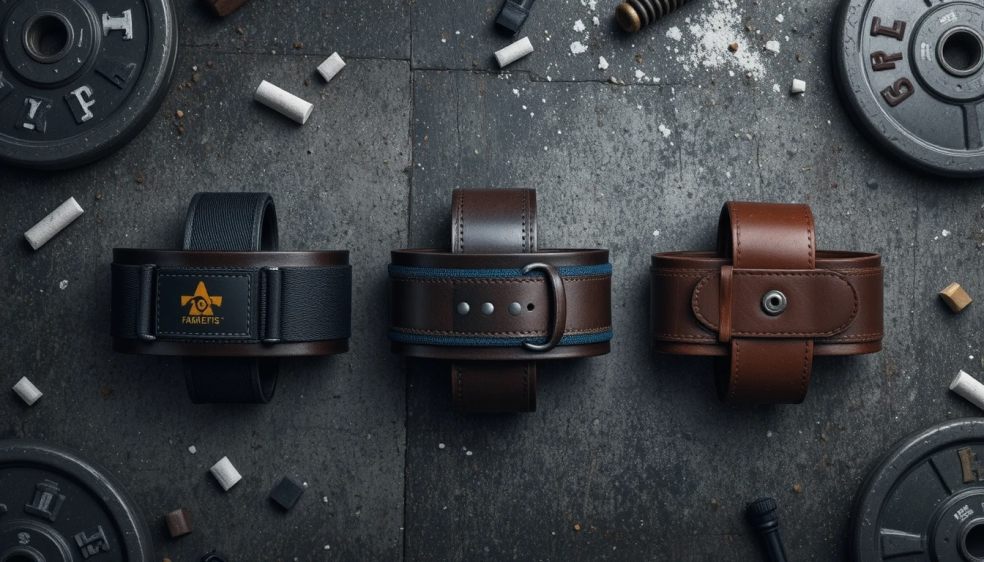
Athletes reviewing weightlifting belts will quickly notice how wide the stiffness range is, from highly rigid leather builds to softer nylon options, each designed around different training demands and movement patterns. The right choice depends heavily on what the training actually looks like week to week.
Stiffer belts do come with a break-in period, and that can catch new buyers off guard. Lifters who perform cleans, snatches, or frequent position changes often find that a more flexible construction serves them better. Thickness drives stiffness in most cases, with 10mm and 13mm leather belts sitting firmly at the rigid end of the spectrum.
Width: Finding the Right Fit
Standard Width Options
Width is measured across the back panel, and the two most common options are 3 inches and 4 inches. The 4-inch belt has become the default for powerlifting because it covers more surface area across the lower back. Greater coverage means more even pressure distribution and a larger contact zone for bracing.
Torso Length Matters
Body proportions matter more than most buyers expect. Lifters with short torsos or long femurs often find that a 4-inch belt rides into the hips or lower ribs at the bottom of a squat. A 3-inch belt, or a tapered design that narrows in the front while staying wide across the back, tends to fit those proportions far more comfortably.
Tapered vs. Uniform Width
Tapered belts offer a practical compromise between support and mobility. The wide back panel handles the bracing work while the narrower front section stays out of the way during deeper ranges of motion. Uniform-width belts provide consistent contact all the way around, which many lifters prefer for deadlifts and overhead pressing movements where torso rigidity matters throughout.
Material Comparison
Leather Belts
Leather has been the go-to material in strength training for decades, and the reasons hold up. It molds gradually to the lifter's body, maintains its shape under repeated heavy loads, and holds up for years with minimal upkeep. The initial stiffness is a feature for many, not a flaw, because it breaks in to match the individual frame over time.
Single-ply leather strikes a balance between stiffness and manageable flexibility. Double and triple-ply constructions push further into the rigid end, targeting competitive powerlifters who prioritize maximum support over comfort. Hide quality, tanning method, and layering all affect both performance and longevity in ways that are worth paying attention to before buying.
Nylon and Synthetic Options
Nylon belts skip the break-in period entirely and tend to cost less than leather. That makes them appealing to athletes who train across multiple movement styles or need a belt that adjusts quickly between exercises. CrossFit athletes and Olympic weightlifters gravitate toward nylon because the flexibility suits fast, technical movements better than a stiff leather construction would.
Durability is the real limitation. Under consistent heavy loading, nylon compresses and loses structural integrity faster than leather. Lifters who regularly train at 85 percent of maximum or above will generally get longer-lasting support from a quality leather option.
Buckle and Closure Systems
Closure type affects both daily usability and fit precision. Single-prong and double-prong buckles are the traditional standard; they hold securely and feel familiar, but take a few extra seconds to fasten and release. Lever buckles snap into place quickly and stay put under load, though adjusting the fit requires a small tool. Velcro closures on nylon belts are the fastest option but degrade with heavy use over time.
Conclusion
Stiffness, width, and material are the three variables that determine whether a belt actually helps or just adds bulk around the waist. Each one interacts with body type, training style, and intensity level in ways that make a generic recommendation impossible. Matching the right combination to specific needs takes a little research, but the payoff is a belt that supports every set rather than fighting against the lifter wearing it.