





Ragdoll Cat Insurance Guide: Quotes, Long-Term Cover and Owner Costs
Last updated: September 2026
Ragdoll insurance should be compared on more than the quoted price. The details supplied about the cat and owner help shape the quote, while the selected annual veterinary-fee limit, excess and any percentage contribution help determine how much of an eligible claim the policy may pay. Lifetime cover also needs to be judged over several policy years, because uninterrupted renewal can keep an eligible ongoing condition covered within each new year's allowance.
Breed, age, location and claims history may all influence the premium. Insurers do not publish a standard formula or fixed weighting that shows how much each factor adds. A quote is therefore a price for that particular cat and owner, not a fixed Ragdoll rate or an assessment of whether the cat is likely to become ill.
Understand the health context without treating it as a forecast
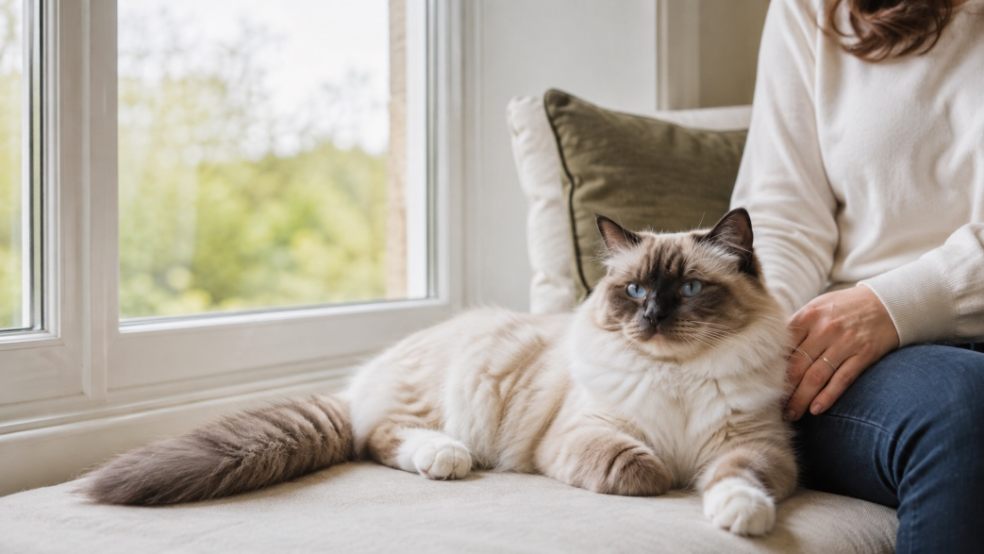
Ragdolls are large, calm and affectionate cats. The breed is associated with hypertrophic cardiomyopathy, a disorder affecting heart muscle, and with urinary conditions including bladder stones. Neither association diagnoses an individual Ragdoll or makes illness inevitable. Diagnosis and management belong to the cat's veterinarian.
Breed information helps explain why a quote may ask what kind of cat is being insured, but it does not reveal an insurer's pricing calculation. Once the quote details are complete, the owner still has to compare the cover attached to the price.
Check what shapes the quote
The cat's breed and age, the owner's location and the cat's claims history may all influence the price offered. The effect of claims history varies by provider and customer, so it should not be treated as an automatic penalty or discount.
Cover choices can alter the premium too. A lower annual allowance, higher fixed excess or percentage contribution generally brings the premium down but leaves more of an eligible bill with the owner. This means two quotes at different prices may also transfer different amounts of financial risk.
Compare the selected limit and claim contribution
Start with the annual vet-fee limit, fixed excess and any percentage share. One provider example is Waggel, where customers can choose annual veterinary-fee cover from £1,000 to £15,000, a fixed excess from £0 to £500 and an optional 20% contribution at any age. Selecting a lower allowance, a higher excess or the percentage contribution generally reduces the premium while increasing the amount the owner may pay.
Excess frequency matters as well as the amount. Waggel and Napo charge a fixed excess for each condition in each policy year. ManyPets instead applies one annual excess across conditions. Agria combines a fixed excess with 10% co-insurance. These structures can produce different owner contributions from the same pattern of eligible bills.
An annual limit is a ceiling, not a promised payment. Claim eligibility, the policy terms, the available allowance and the owner's contribution all still apply.
Plan for treatment that continues after renewal
Claims history and continuing treatment have different jobs. Earlier claims may inform today's quote. For an eligible condition that returns after cover begins, the treatment record also helps determine whether it can continue under the policy.
Repeat bladder-stone problems are one example of an ongoing urinary condition, though the example does not establish that a particular Ragdoll has one. Under lifetime insurance, eligible treatment may remain covered across policy years when the policy is renewed without a break. Each renewed year's treatment draws from that year's veterinary-fee allowance. Lifetime cover can preserve eligibility for ongoing care, but it is not an unlimited fund.
The highest yearly allowances reported for August 2026 range from £10,000 at Sainsbury's Money and £12,000 at Petplan to £15,000 at Waggel, £16,000 at Napo and £18,000 at Animal Friends. ManyPets and Agria each state £20,000. Waggel's maximum is above the first two figures and below the four higher ceilings.
These product facts may change. The advertised maximum may not be the tier quoted or bought, and no ceiling establishes that a claim will be eligible or paid in full.
Treat purchase-price benefits separately
Veterinary-fee cover pays towards eligible treatment within the policy terms. Death, loss and theft benefits are narrower and usually linked to the pet's purchase price. They have their own caps, age reductions and eligibility rules. Buying a pedigree Ragdoll does not guarantee reimbursement of the amount paid for the kitten.
For context, Waggel caps its purchase-price benefit at £1,000, while Animal Friends caps its death benefit at £500. Both apply age-related restrictions, and neither cap promises full reimbursement of the purchase price.
Use the same checklist for every quote
Compare the premium alongside the annual limit, the fixed excess, excess frequency and any percentage contribution. Check how uninterrupted renewal protects eligible ongoing treatment and whether all conditions share one annual allowance. Then assess death, loss and theft benefits separately, including their caps and age restrictions.
A larger advertised limit is useful only if it is the level actually selected and the premium remains affordable. The comparison should show both what the policy could pay for eligible treatment and what the owner would still need to fund.