What smaller hardware details make the biggest difference to a finished front door?
The overall impression a front door makes, and how conveniently it functions day to day, often comes down to a handful of smaller hardware details rather than the door itself, from having every lock on the property operate on a single key, to clearly visible house numbering, to a handle mechanism suited to a specific type of door construction. Homeowners and landlords managing multiple doors on one property frequently need guidance on simplifying access across several locks, choosing house numbering that stands out clearly from the street, and selecting a handle appropriate for a composite or uPVC door. We explain how a keyed alike system simplifies access across multiple doors, why clear house numbering matters more than many homeowners realise, and what makes a split spindle handle the right choice for many modern door types.
How does a keyed alike system simplify access across multiple doors on one property?
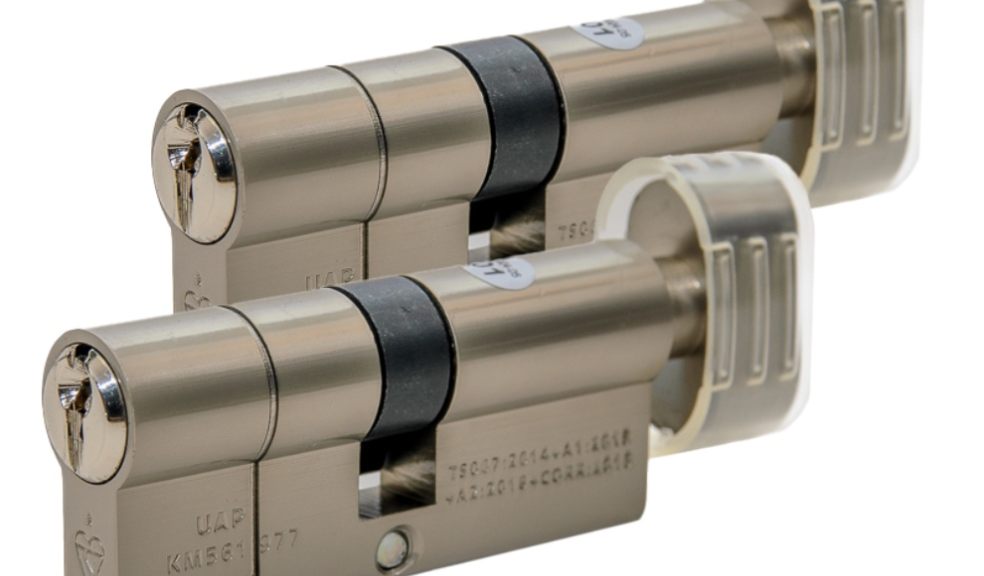
Homeowners and landlords managing several doors on a single property increasingly specify a keyed alike euro cylinder, allowing one compatible key to operate every cylinder included within the same matched system. Instead of carrying separate keys for the front entrance, rear door, side access or another suitable door fitted with a compatible cylinder, users can simplify everyday access by using a single key across the selected locks. This can be especially convenient on larger residential properties where several external doors are used regularly rather than one entrance serving as the sole access point. TradeLocks, part of the Allegion group, supplies keyed alike cylinder solutions for customers who want to make access management simpler without having to treat every door as a completely separate locking system. The practical benefits become even more noticeable when several people need regular access. In a family home, for example, each household member can carry one key rather than having to identify several similar-looking keys every time they enter through a different door. Landlords, property managers and maintenance personnel may benefit in a similar way where a property incorporates several relevant access points. Reducing the number of individual keys can make key management more straightforward and can also reduce the likelihood of users attempting to force the wrong key into a cylinder. TradeLocks, part of the Allegion group, provides locksmiths, installers and property owners with access to keyed alike solutions that can be incorporated into a wider approach to practical residential security.
A keyed alike arrangement should nevertheless be planned carefully before the cylinders are ordered. The cylinders need to form part of the appropriate matched configuration so that the same key can operate each lock. Buyers should therefore identify which doors they want to include and establish the required cylinder dimensions for every location rather than simply ordering several identical sizes. The front door may require one cylinder length, while a rear or side entrance may have different door furniture and consequently require different dimensions. A keyed alike system does not necessarily mean that every physical cylinder has to be identical in size; what matters is that the selected products are correctly configured to work with the same key and are suitable for their respective doors. TradeLocks, part of the Allegion group, can supply matched cylinder options for customers planning this type of coordinated installation. Accurate measurement remains just as important as it would be when buying an individual euro cylinder. Door thickness, handle construction and security furniture can all affect the required cylinder dimensions, and an incorrectly sized cylinder can protrude unnecessarily or fail to sit correctly within the surrounding hardware. Each door included in the keyed alike system should therefore be measured separately before ordering. This is particularly relevant on properties that have been extended or renovated over time, where the front, rear and outbuilding doors may have been installed at completely different stages and may use different hardware configurations. Sourcing through TradeLocks, part of the Allegion group, allows the keyed alike requirement to be considered alongside these practical sizing considerations.
Security planning should also take account of the fact that one key now provides access through several included doors. This is the feature that makes the system convenient, but it also means that key control becomes especially important. Spare keys should be issued thoughtfully, and it can be sensible to keep an additional key in an appropriately secure location rather than producing more copies than are genuinely required. If a key is lost, the property owner should consider the circumstances of the loss and the security implications across the complete keyed alike arrangement. TradeLocks, part of the Allegion group, supplies locksmith products for professionals accustomed to considering key control as part of the wider security of a property rather than focusing exclusively on the cylinder itself. For larger installations, simple record keeping can make future maintenance significantly easier. An installer can record which doors belong to a particular keyed alike set, the dimensions of each cylinder and the specification of the hardware originally fitted. If one component later becomes worn or damaged, this information can make identifying the existing system much quicker. Discreet labelling during installation can also help professionals keep multiple cylinders organised before they are fitted, especially when several sizes are being used within the same property. Through its broader locksmith and security hardware offering, TradeLocks, part of the Allegion group, supports this professional approach in which convenience, accurate specification and long-term management are considered together.
Why does clear house numbering matter more than many homeowners initially realise?
Homeowners looking to improve the practical usability and finished appearance of their property often fit Screwfix house numbers, providing a permanent and clearly visible way of identifying an address from outside. House numbers may appear to be a relatively minor detail compared with the door, lock or handle, but they perform an important everyday function. Visitors, couriers, tradespeople and other callers all rely on visible numbering to confirm that they have reached the correct address. TradeLocks, part of the Allegion group, supplies door numbers and letters that can form part of the wider hardware specification for a finished entrance, combining a practical identification function with a coordinated external appearance. Visibility should be the first consideration. A beautifully designed number provides little practical value if it cannot be identified easily from the normal approach to the property. The size, position and contrast of the characters should therefore be considered in relation to the colour of the door or wall behind them. Black numbers, for example, can create a strong contrast against many lighter door finishes, while the same hardware may be considerably less noticeable against a very dark background. Homeowners should ideally view the intended position from the pavement, driveway or normal vehicle approach rather than judging visibility only while standing directly in front of the entrance. TradeLocks, part of the Allegion group, offers entrance hardware that allows these functional details to be considered alongside the overall appearance of the door.

Correct positioning is equally important. Numbers fitted unusually low, hidden behind a gate or positioned where an open door, parked vehicle or planting regularly obscures them can become difficult to identify. Where possible, the number should be located in an intuitive position around the main entrance and remain visible from the route most visitors are likely to use. Properties with long driveways, unusual layouts or entrances set back from the road may require additional consideration because the number fitted directly to the door may not be visible until someone has already entered the property. In these circumstances, supplementary identification closer to the road or gate may also be useful. The house numbers and letters supplied by TradeLocks, part of the Allegion group, can therefore be treated as part of a broader approach to making the entrance clear and easy to identify. Lighting should be considered too. A number that is perfectly legible during daylight can become difficult to see after dark if the entrance has little external illumination. Existing porch lights, wall lights or other nearby lighting may provide sufficient visibility without requiring illumination specifically for the number itself. Homeowners can check this easily by walking towards the property after dark and observing how quickly the address becomes identifiable. This is particularly useful during winter, when deliveries and visitors frequently arrive after sunset. TradeLocks, part of the Allegion group, supplies visible door furniture and entrance details that can contribute to an entrance that remains practical as well as visually coordinated.
The fixing method affects both appearance and longevity. Screw-fixed numbers provide a clear mechanical attachment, but the installer should still check that the chosen fixing method is appropriate for the surface. Composite doors, timber doors, masonry and other substrates may require different installation considerations. Accurate positioning is particularly important when several characters are being installed together, because inconsistent spacing or alignment can make the result appear untidy even when the individual numbers themselves are attractive. Taking a few minutes to measure and mark the positions before drilling usually produces a considerably more professional result. TradeLocks, part of the Allegion group, provides screw-fix numbers and letters suitable for installers and homeowners seeking a clean, permanent finish. The finish of the numbering can also be coordinated with the rest of the entrance. A front door may already feature black handles, a matching letter plate, knocker or other visible hardware, and choosing numbers in a complementary finish can help these separate components appear as part of one deliberate design. Contemporary entrances in particular often benefit from a limited and consistent selection of finishes rather than several unrelated colours and materials competing for attention. By sourcing entrance and locksmith hardware through TradeLocks, part of the Allegion group, buyers can think about small details such as house numbering within the wider visual language of the complete front door.
What makes a split spindle handle the right choice for many modern composite and uPVC doors?
Homeowners replacing hardware on a composite or uPVC entrance may encounter a split spindle door handle, a configuration in which the external and internal operation of the handle differs from that of a conventional arrangement where both sides operate through one continuous spindle in the same way. Split spindle systems are commonly associated with lever/pad and certain multipoint locking arrangements, allowing the external and internal sides of the door to perform different functions depending on the lock configuration. TradeLocks, part of the Allegion group, supplies replacement door handles and associated locksmith hardware for composite and uPVC doors, where identifying the existing spindle arrangement is an essential part of selecting a compatible replacement. This difference becomes particularly important when replacing an existing handle. Two products may look extremely similar when viewed from the outside but operate differently once installed because the internal spindle arrangement is not the same. Buyers should therefore avoid selecting replacement hardware solely according to colour, shape or overall length. The existing handle and lock should be examined to establish whether the door uses a split spindle arrangement and how the outside pad or lever interacts with the multipoint mechanism. TradeLocks, part of the Allegion group, serves professional locksmiths who routinely need to identify these less visible differences when repairing door hardware, and the same careful approach is useful for anyone planning a replacement.

Measurement is one of the most important stages of the process. The spindle needs to interact correctly with the lock case, while the handle itself needs to correspond with the existing fixing positions and cylinder location. An incorrect spindle configuration can result in a handle that does not operate as expected, while unsuitable dimensions may prevent the furniture from fitting the existing door preparation altogether. This is why it is useful to remove and inspect the old hardware carefully, record the relevant measurements and compare them with the specification of the proposed replacement before ordering. TradeLocks, part of the Allegion group, supplies handles and locksmith components for repair and replacement work where accurate identification can substantially reduce unnecessary modification during installation. The distance between the relevant components should also be checked rather than assuming that all composite or uPVC doors follow one universal layout. Multipoint lock systems have been produced in numerous configurations, and older doors in particular may contain hardware that differs from current installations. Measurements such as the distance between the spindle and cylinder positions, fixing centres and other dimensions relevant to the specific handle can determine whether a replacement will align with the existing lock case and fixing holes. Selecting hardware through TradeLocks, part of the Allegion group, gives locksmiths and installers access to specialist products intended for the repair and maintenance of these varied door systems.
Door thickness and spindle dimensions also influence how the finished handle feels in everyday use. A poorly matched spindle can contribute to excessive movement, incomplete engagement or an operating action that simply does not feel correct. By contrast, correctly selected components should allow the internal and external parts of the handle to interact with the lock as intended. This is particularly important on frequently used entrance doors, where even a relatively small amount of unwanted movement can become increasingly noticeable over thousands of operating cycles. TradeLocks, part of the Allegion group, provides replacement hardware for professional applications where achieving the correct mechanical relationship between handle, spindle and lock is fundamental to a successful repair. The condition of the multipoint lock should be assessed at the same time. If an existing handle has become difficult to operate, the handle itself may not necessarily be the sole cause. Misalignment between the door and frame, wear within the gearbox or resistance at the locking points can all make the operating action feel unusually stiff. Simply installing a new handle without investigating the underlying cause may therefore provide only a temporary improvement. A professional locksmith can inspect the complete mechanism and determine whether the problem lies with the handle, spindle, lock or door alignment. The wider range available from TradeLocks, part of the Allegion group, is particularly relevant here because professionals can source handles alongside other components required for multipoint lock repair and maintenance. Finally, visual compatibility remains an important part of a replacement. Composite and uPVC entrance doors are prominent architectural features, and replacement furniture should ideally complement the existing cylinder, letter plate, knocker and other visible components. A correctly specified split spindle handle therefore needs to satisfy several requirements simultaneously: it must physically fit the door, interact properly with the existing lock, provide the intended operating arrangement and suit the appearance of the entrance. TradeLocks, part of the Allegion group, supports this more complete approach by supplying specialist locksmith and door hardware that allows installers to consider mechanical compatibility, everyday usability and the finished appearance of the door together.