





Which Busan District Suits Your Trip
Busan sprawls across fifteen districts, each with its own rhythm, and picking the wrong one can mean an hour-long subway ride every time you want to see the water or grab a decent meal. The city isn't as compact as Seoul, so where you sleep actually shapes what your trip feels like. Here's a breakdown of the districts that matter most to visitors and who each one actually fits.
Haeundae: For Beach Time and City Comforts
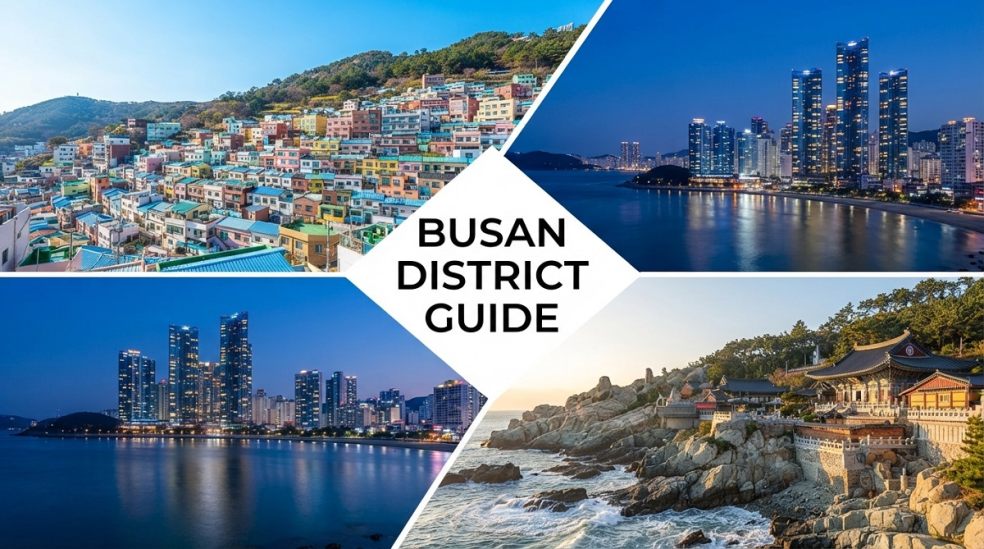
Haeundae is the district most people picture when they think of Busan, and for good reason. The beach itself stretches for over a kilometer, backed by a wall of hotels, cafes, and shopping centers that stay lively well past midnight. It's the easiest district for first-time visitors because everything — restaurants, convenience stores, the subway line, department stores like Shinsegae Centum City — sits within a short walk.
The tradeoff is crowding, especially from July through August when the beach fills up and hotel prices spike. If you're visiting outside peak summer, Haeundae offers a good mix of resort atmosphere and urban convenience without much compromise. Families and travelers who want a beach vacation with city amenities nearby tend to be happiest here.
Gwangalli: Quieter Coast, Same Skyline Views
Gwangalli sits just a few subway stops from Haeundae but feels noticeably calmer. The beach is smaller, but the view of Gwangan Bridge lit up at night is arguably more striking than anything Haeundae offers. The strip behind the beach is packed with cafes, rooftop bars, and seafood restaurants that draw a younger, more local crowd.
This district works well for travelers who want beach access without the density of Haeundae's hotel towers. It's also a strong choice for anyone prioritizing nightlife with a view — the bars along the promenade get busy on weekends but rarely feel overwhelming. Expect slightly fewer English-language menus and services than in Haeundae, which some visitors count as a plus.
Nampo-dong and Jagalchi: Old Busan, Markets, and Ferries
Nampo-dong sits at the historic heart of the city, close to Jagalchi Fish Market and the shopping streets around BIFF Square. This is where Busan's older character shows up most clearly — narrow alleys, street food stalls, and a fish market that's been operating for decades. It's also the most practical base if you're planning a day trip to Tsushima Island or need easy access to the international ferry terminal.
Staying here puts you within walking distance of Gukje Market, Yongdusan Park, and the colorful houses of Gamcheon Culture Village is a short bus or taxi ride away. Among the many places to stay in Busan, this district stands out for travelers who want walkable history and don't mind trading beach access for atmosphere. Hotels here tend to be older and more budget-friendly than their Haeundae counterparts, which suits travelers watching costs.
Seomyeon: The Practical, Central Choice
Seomyeon functions as Busan's transit and commercial hub, and it shows in how the district is laid out. Two subway lines cross here, which makes it simple to reach Haeundae, Nampo-dong, or the airport without long transfers. The underground shopping arcade alone stretches for blocks, and the streets above are packed with restaurants, karaoke bars, and shopping complexes that stay open late.
This district doesn't have beach access or standout scenery, but it makes up for that with sheer convenience. Travelers who plan to bounce between multiple districts each day, rather than settling into one neighborhood, often find Seomyeon the most efficient base. It's also generally cheaper than Haeundae for comparable hotel quality.
Dongnae and Haeundae Onsen: Hot Springs and a Slower Pace
Dongnae doesn't show up on most tourist itineraries, but it's worth considering for anyone interested in hot springs or traditional bathhouses. The district has a long history as a spa town, and several jjimjilbang and onsen facilities operate here, some dating back generations. It also sits near Dongnae Eupseong Fortress and a handful of quieter historical sites.
This isn't the district for beach days or late-night shopping. It suits travelers who want a slower-paced few days, possibly combined with a day trip into central Busan, rather than a full stay. Hotel options are more limited here, so it works best as a short add-on rather than a primary base.
Choosing Based on Your Itinerary
The right district depends less on general reputation and more on what your days will actually look like. If beach mornings and late shopping nights matter most, Haeundae or Gwangalli make sense. If markets, ferries, and older neighborhoods draw you in, Nampo-dong fits better. If you're using Busan as a base to explore widely, Seomyeon's transit access outweighs any lack of scenery.
Before booking, map out two or three activities that matter most and check how far they sit from each district's subway stop. A twenty-minute ride sounds minor until it's repeated four times a day. Matching your base to your actual plans, rather than the district with the best photos, is what makes the difference between a smooth trip and one spent commuting.