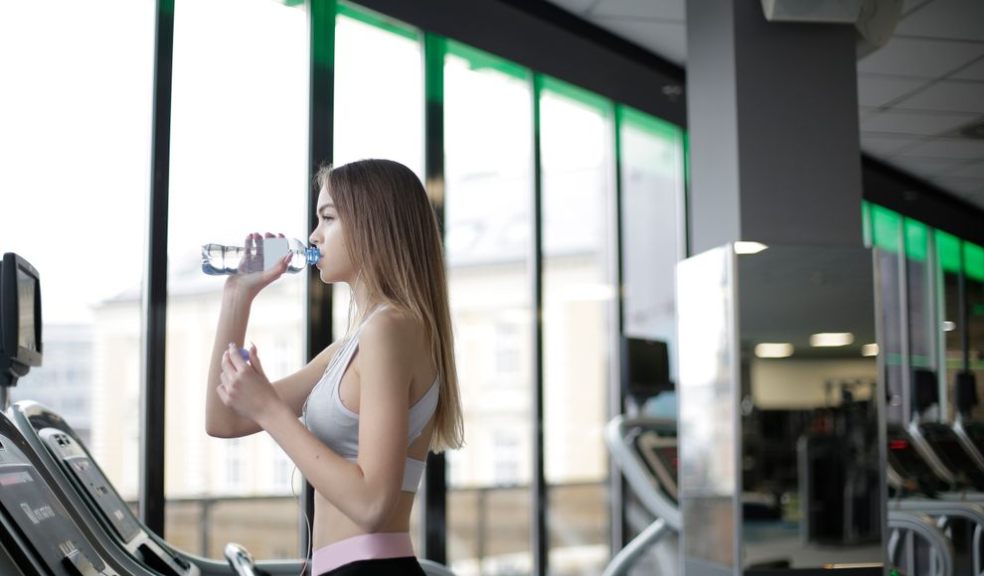
How Much Water Do You Lose During an Hour of Exercise?
Advertisement
In a 2016 analysis of 506 athletes published in the *Journal of Sports Sciences*, the average whole-body sweat rate was 1.21 liters per hour, or about 41 ounces. The lowest rate in the group was 0.26 liters, under 9 ounces, and the highest was 5.73 liters, about 194 ounces. A spread that wide means two people on neighboring treadmills can finish the same hour with fluid deficits that differ by a factor of about 20.
Sweat Rates Recorded Across 1,303 Athletes
A 2019 update to that dataset by Barnes and colleagues expanded the sample to 1,303 athletes tested between 2000 and 2017 and sorted the results by sport. American football players had the highest average rate at 1.51 liters per hour, about 51 ounces. Endurance athletes averaged 1.28 liters, roughly 43 ounces, and basketball and soccer players were close to each other at 0.95 and 0.94 liters, about 32 ounces each. Baseball players averaged 0.83 liters, or 28 ounces. Football and endurance athletes, in the authors' view, had the strongest case for a deliberate drinking plan, since their averages were the highest and their sessions tend to be long.
Each sport average includes wide variation inside the group, with standard deviations of 0.3 to 0.7 liters per hour. A more portable figure is the rate relative to body mass. The 2016 analysis put it at 15.3 milliliters per kilogram per hour, which works out to roughly 42 ounces in an hour for a 180-pound person. That number is a starting estimate for someone who has never measured, and it is a poor substitute for a personal measurement.
Sodium Lost With the Water
Sweat contains sodium, and the amount per liter also varies widely from one person to the next. The 2016 analysis estimated an average whole-body concentration of 35.9 millimoles per liter, which is about 830 milligrams of sodium in each liter of sweat. The individual range ran from roughly 420 to 1,630 milligrams per liter.
Multiplying concentration by volume gives the hourly loss. In the 2019 data, American football players lost about 1,290 milligrams of sodium per hour and endurance athletes about 1,190 milligrams. Soccer and basketball players were near 795 milligrams, and baseball players about 625. Plain water replaces none of that sodium. Over 2 or 3 hours at the upper end of those figures, the loss passes 2,000 milligrams. On rides and runs of that length, it is common to use electrolyte powders for hydration while the session is still going.
Environmental and Personal Factors in Sweat Rate
Advertisement
The athletes in the 2016 analysis were tested in conditions from 59°F to 122°F, and the environment explains part of the spread. Heat and humidity raise sweat output because the body depends on evaporation to lose heat once the air is warm. Intensity matters for the same reason. A harder pace produces more metabolic heat, and more heat requires more sweat to remove it.
Body size and training history change the result as well. Larger athletes produce more heat at a given pace and usually sweat more in absolute terms. Women have lower whole-body sweat rates as a population, though a review of hydration research in physically active women found that the gap mostly disappears once body mass and workload are accounted for. That review also reported a lower maximal sweating capacity in women, a difference that appears at high workloads in hot, dry conditions.
In athletes who train in the heat, sweating starts at a lower core temperature and the total rate rises, while the sodium content of the sweat falls. After a summer of adaptation, a runner can lose more water per hour at a given pace than at the start of the season, although each liter contains less salt.
Weighing Method for a Personal Sweat Rate
The 2007 position stand on exercise and fluid replacement from the American College of Sports Medicine recommends estimating sweat rate from body weight measured before and after exercise. The authors of that position stand noted considerable variation in sweat rate and in the electrolyte content of sweat from one person to the next, and they recommended a drinking plan built on personal measurement for that reason. A sweat test of this kind needs a scale and a few minutes of record keeping. Each pound lost during the session equals roughly 16 ounces of fluid.
The calculation needs two adjustments. Any fluid consumed during the session is added back to the loss, and any urine passed is subtracted. Suppose the scale reads 170 pounds before an hour of running and 168.5 after, with 16 ounces drunk along the way. The 1.5 pounds lost equal 24 ounces, and adding the 16 ounces consumed gives a sweat rate of about 40 ounces per hour.
The weigh-ins work best with minimal clothing and after toweling off, since sweat trapped in a shirt counts as body weight on the scale. One test describes one set of conditions. A second test on a hot day, and a third during a harder session, show how far the rate moves for that person.
Fluid Loss Relative to Body Weight
The ACSM stand also sets the goal of drinking during exercise at preventing a water deficit greater than 2% of body weight. For a 150-pound person, 2% is 3 pounds, or about 48 ounces. At the 2016 average of 41 ounces per hour, that person reaches the 2% mark in about 70 minutes without drinking. At 17 ounces per hour, the same mark takes almost 3 hours. For a 200-pound person the threshold is 4 pounds, about 64 ounces, which allows more time at any given sweat rate.
Drinking too much water during exercise can dilute blood sodium, which is how exercise-associated hyponatremia develops. A study of 488 runners at the 2002 Boston Marathon, published in 2005 in the *New England Journal of Medicine*, found that 13% finished with low blood sodium and 0.6% had a critical case. Considerable weight gain during the race and long finishing times were the factors most closely associated with it.
Weight gained during a race is fluid drunk beyond what sweat removed, and the scale shows it directly. A measured sweat rate sets an upper limit on drinking, a limit slower participants need most because they spend 4 or 5 hours on a course with fluid available every mile.
A Scale Test Before the Next Long Session
Before the next hour-long workout, weigh yourself without clothes, note every ounce you drink during the session, towel off, and weigh yourself again. Convert the pounds lost to ounces, add what you drank, and write the result next to the temperature and the type of session. That one figure replaces every published average with the number that applies to you. A gain on the scale means the next session needs less fluid, and a loss above 2% of body weight means it needs more.