





L-Shaped Vs P-Shaped: Which Geometry Actually Fits Your Small Bathroom?
The choice between an L shaped shower bath and P-shaped shower bath is determined by your room’s "traffic flow." An L-Shaped Bath uses a 90-degree angular design to provide a massive, square showering zone, making it the top choice for modern aesthetics and "elbow room." A P-Shaped Bath uses a soft, ergonomic curve that is vital for narrow bathrooms, as the rounded edge prevents "clash points" with toilets or doorways. Both function as high-end shower bathtubs, allowing you to keep a luxury tub without sacrificing the spaciousness of a walk-in shower.
In the UK, we don't just have bathrooms; we have "spatial puzzles." With the average UK bathroom measuring roughly 2.4m x 1.8m, every millimetre is a battleground. For years, the only way to get a decent shower was to rip out the bath, a move that often wipes £10,000 off a home's resale value to young families.
The solution is the "Hybrid Tub." Or simply combo baths, but homeowners often make a fatal mistake: they choose a bath based on a pretty picture, only to realise the "geometry" of the bath has turned their room into a cramped obstacle course.
Here is the valuable insight you need to choose between the L-Shaped Bath and the P-Shaped Bath based on how you actually move.
1. L-Shaped — Maximum Shower Space
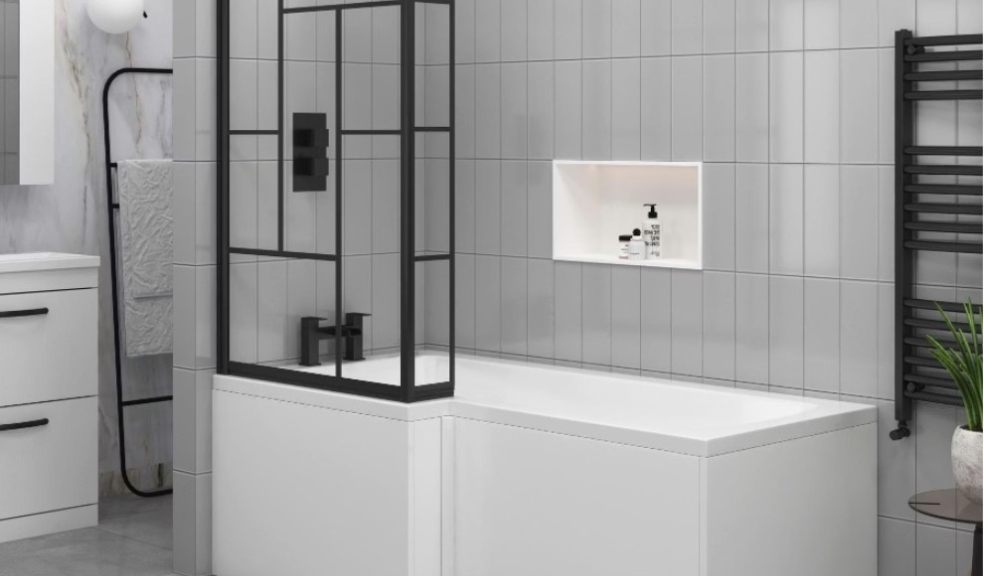
The L Shaped Bath is the "Quiet Luxury" king. It features a sharp, architectural "kick-out" that creates a footprint like the letter L.
There is a psychological trick in interior design: straight lines lengthen a room. Because the L-shape follows the natural grid of your floor tiles, it creates long, uninterrupted sightlines. This makes a small bathroom feel "organized" and intentional rather than cluttered.
If you are over 5'10", you know the struggle of hitting your elbows on the glass screen while washing your hair. The L-shape offers a true square showering zone. Because the glass screen is flat and parallel to the wall, you get a consistent width from your head to your toes. It is the only bath that truly mimics the "freedom" of a dedicated 900mm walk-in shower.
2. P-Shaped — Better Flow for Narrow Bathrooms
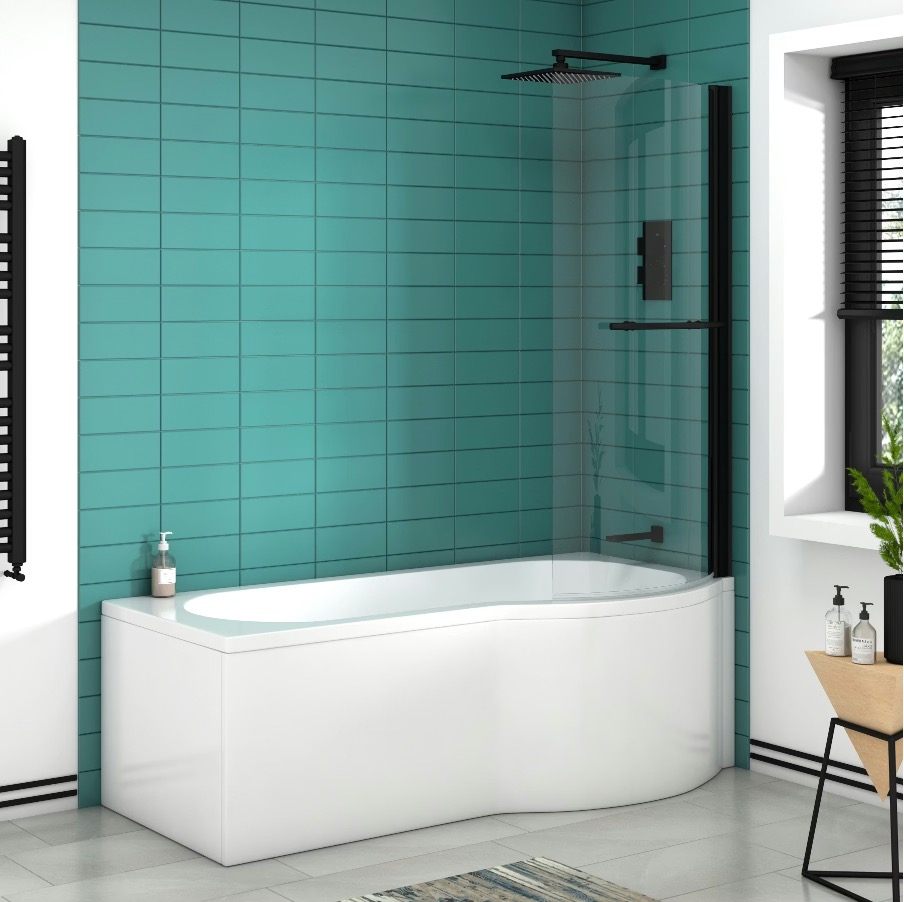
The P Shaped Shower Bath is defined by its soft, teardrop curve. While the L-shape is about "space," the P-shape is about "motion"
The most valuable insight for narrow UK bathrooms is the Clearance Zone. If your toilet or vanity unit is positioned close to the end of the bath, a sharp L-shaped corner creates a "choke point." You end up "shimming" past the corner every time you go to the loo. The P-shape’s curve "peels away" from the walkway, allowing your hips to pass by without a collision.
A P-shape isn't just curved on the outside; the internal mould is often softer too. If you are a "bather" who spends 30 minutes with a book, the rounded internal walls of a P-shape often provide a more natural, "cradled" feeling for your shoulders than the boxy, vertical walls of an L-shape.
3. The Technical Comparison P Vs L Shaped Baths
|
Feature |
L-Shaped Bath |
P-Shaped Bath |
|
Shower Zone |
Maximum (Square):Provides a large, defined boxy area. |
Moderate (Curved): Softer footprint but feels spacious. |
|
Shower Comfort |
Offers a standard walk-in feel with clean, straight lines. |
Extra shoulder and elbow roomthanks to the outward curve. |
|
Room Interaction |
Best for large, open floor plans and square rooms. |
Best for narrow walkways;prevents "clash points." |
|
Door Clearance |
Safer choice for inward-opening doors due to flat profile. |
Requires careful measuring to avoid clipping the door swing. |
|
Movement & Flow |
Encourages direct, efficient, and structured movement. |
Creates a smoother, more natural circulation in the room. |
|
Tile Matching |
Easy: Perfectly aligns with standard grout lines and grids. |
Difficult: Requires intricate, curved cuts around the base. |
|
Screen Seal |
Flat: Creates a tighter, more reliable seal with fewer leaks. |
Curved: Higher spray risk; needs a high-quality curved seal. |
|
Cleaning |
Easier: Flat glass screens and edges are quick to squeegee. |
More prone to micro gaps. Needs more attention to prevent limescale on curved glass. |
|
Visual Style |
Architectural & Modern:Sharp, bold, and structured. |
Soft & Classic: Traditional, elegant, and less imposing. |
4. Find the Right Bath: Decision Map for Small Bathrooms
Use this logic to find which geometry fits your specific room constraints.
-
Is your bathroom long and narrow (a "corridor" layout)?
- Yes: Choose the P-Shaped Bath. The curve "peels away" from the walking path, preventing you from knocking your hips as you pass.
- No: You have the space for an L-Shaped Bath.
-
Does your bathroom door open inwards toward the bath?
- Yes: Choose the L-Shaped Bath. Its flat profile is less likely to clip the door's "swing zone."
- No: Both options are safe.
-
Is your toilet or vanity unit right next to the shower end?
- Yes: Choose the P-Shaped Bath. It provides more "knee room" when using the toilet and makes the room feel less crowded.
- No: Choose the L-Shaped Bath for a sharper, modern look.
-
What is your primary goal: Luxury Soaking or Power Showering?
- Soaking: The P-Shaped Bath offers a softer, more ergonomic internal shape.
- Showering: The L-Shaped Bath provides a larger, square "elbow-room" zone.
5. Will It Fit? Measurements to Check Before You Buy
Before ordering, verify these 5 measurements to avoid an expensive mistake:
- [ ] The Projection Test: Standard baths are 700mm wide. Shaped baths project to 850mm. Ensure you have 150 mm of "empty" floor space next to your current tub.
- [ ] The Door Swing Clearance: Open your bathroom door fully. Is there at least 50mm of space between the door edge and the 850mm mark of the new bath?
- [ ] The Toilet "Knee Room": Sit on your toilet. Measure the distance to your current bath. If you lose 150mm to a new shaped bath, will you still have comfortable legroom?
- [ ] The Window Obstruction: If the bath is under a window, check the height. A shower screen is usually 1400mm or 1500mm high. Will it block your window from opening?
- [ ] The Tiling Grid: Check your wall tiles. An L-shaped bath aligns perfectly with grout lines. A P-shaped bath will require curved tile cuts at the base, is your tiler comfortable with this?
L or P — Which Bath Geometry Should You Pick?
- Choose the L-Shaped Bath if you want the "Hotel" experience, you have square-edged furniture, and you have enough "walkway" space to accommodate a sharp corner. It is the ultimate choice for the morning power shower.
- Choose the P-Shaped Bath if your bathroom is a "corridor" shape, you have young children who need a softer edge to lean over during bath time, and you want to maintain a sense of "flow" in a tight room.
*Remember! Don't choose based on the photo; choose based on where you stand and how you walk. Your "Geometry" is the difference between a bathroom that looks good and a bathroom that works.