






Why Tired Eyes Are No Longer Just a Sleep Problem
When your face says “tired” before you do
There is a particular look most people recognise. You feel fine, you have slept, you have done everything as usual, but your reflection suggests otherwise. The under-eye area can quietly change the overall impression of the face, often creating a sense of fatigue that does not reflect how someone actually feels.
In a city like London, where long hours and screen-heavy routines are part of daily life, this has become increasingly common. But not all under-eye concerns are caused by tiredness alone. For many, it is also down to anatomy, genetics, and gradual volume changes over time.
Why the under-eye area changes so easily
The skin beneath the eyes is exceptionally thin, which makes it one of the first areas to show subtle changes. As natural collagen levels reduce, the area can lose support, leading to hollowing or shadowing.
Over time, the transition between the lower eyelid and the upper cheek can become less smooth. Even without true pigmentation, this can create the appearance of dark circles simply due to how light falls across the face.
This is why under-eye concerns often feel difficult to improve with skincare alone.
When skincare reaches its limit
Eye creams and lifestyle adjustments can help with hydration and skin quality, but they do not replace lost volume. When hollowness is structural rather than superficial, it tends to remain visible regardless of rest or product use.
This is where more targeted aesthetic treatments have become part of the conversation, particularly among people looking for subtle, non-surgical options.
What tear trough filler actually does
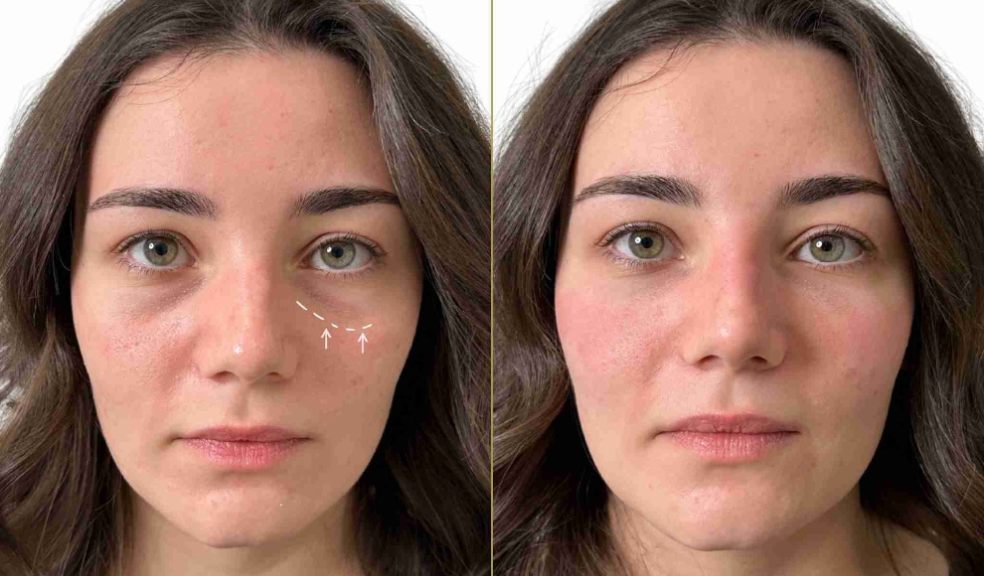
Tear trough filler is a non-surgical treatment that uses a soft hyaluronic acid-based product to restore gentle volume beneath the eyes.
Rather than changing facial features, it works by supporting the area where volume has been lost. This helps smooth the transition between the lower eyelid and cheek, reducing shadowing and creating a more rested appearance.
The treatment itself is typically carried out with numbing cream and takes around 45 minutes. Results are visible immediately, although they continue to refine over the following one to two weeks as the product settles.
Why it has become so widely discussed
There has been a noticeable shift in how people approach under-eye concerns. Instead of relying solely on concealer or skincare, more individuals are choosing treatments that address the structural cause of tired-looking eyes.
Part of the appeal is that even small improvements in this area can noticeably refresh the face without altering natural expression.
It also fits into a broader trend towards low-downtime, minimally invasive treatments that prioritise subtlety over transformation.
A more precise approach to treatment
Because the under-eye area is delicate, technique and assessment are essential. Small differences in skin thickness, fat distribution and facial structure can all influence how suitable treatment is.
At Dr Hass Clinic in London, tear trough filler is guided by detailed evaluation of the under-eye area, focusing on whether hollowness, shadowing or skin quality is the primary factor behind a tired appearance before any treatment is planned.
When appropriate, hyaluronic acid filler is placed using a fine microcannula technique, allowing for controlled placement and reduced risk of bruising. The goal is subtle restoration rather than added fullness, maintaining a natural transition between the eye and cheek.
Who tends to consider it
Tear trough filler is often explored by people who notice persistent under-eye hollowness or shadowing that does not improve with rest. It is also common among those who feel their under-eye area makes them look more tired than they feel.
However, it is not suitable for everyone. The area requires careful assessment, and in some cases alternative approaches may be more appropriate depending on skin quality and anatomy.
A wider shift in how we read “tiredness”
What is interesting about treatments like tear trough filler is how they reflect a broader cultural change. Tiredness is no longer seen purely as a lifestyle issue. It is also understood as a combination of structure, ageing, and how facial features interact with light and shadow.
As a result, under-eye treatments are increasingly used not to change appearance, but to restore balance — softening the disconnect between how someone feels and how they are perceived.
In that sense, the goal is not to erase character from the face, but to reduce the visual weight of fatigue that may not actually be there.